Biometric Sensors Turn Wearables Into Personal Signal Catalogs
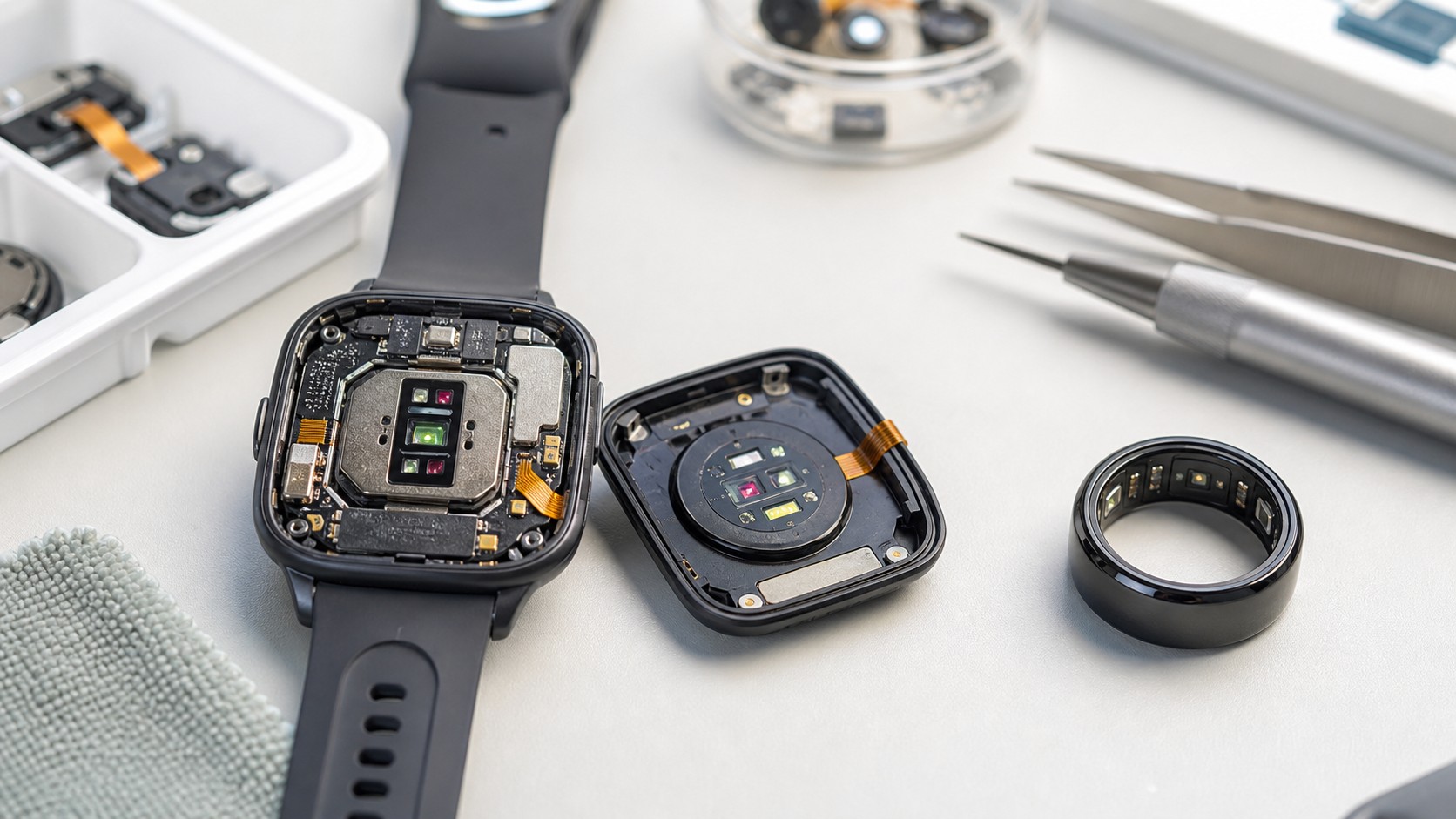
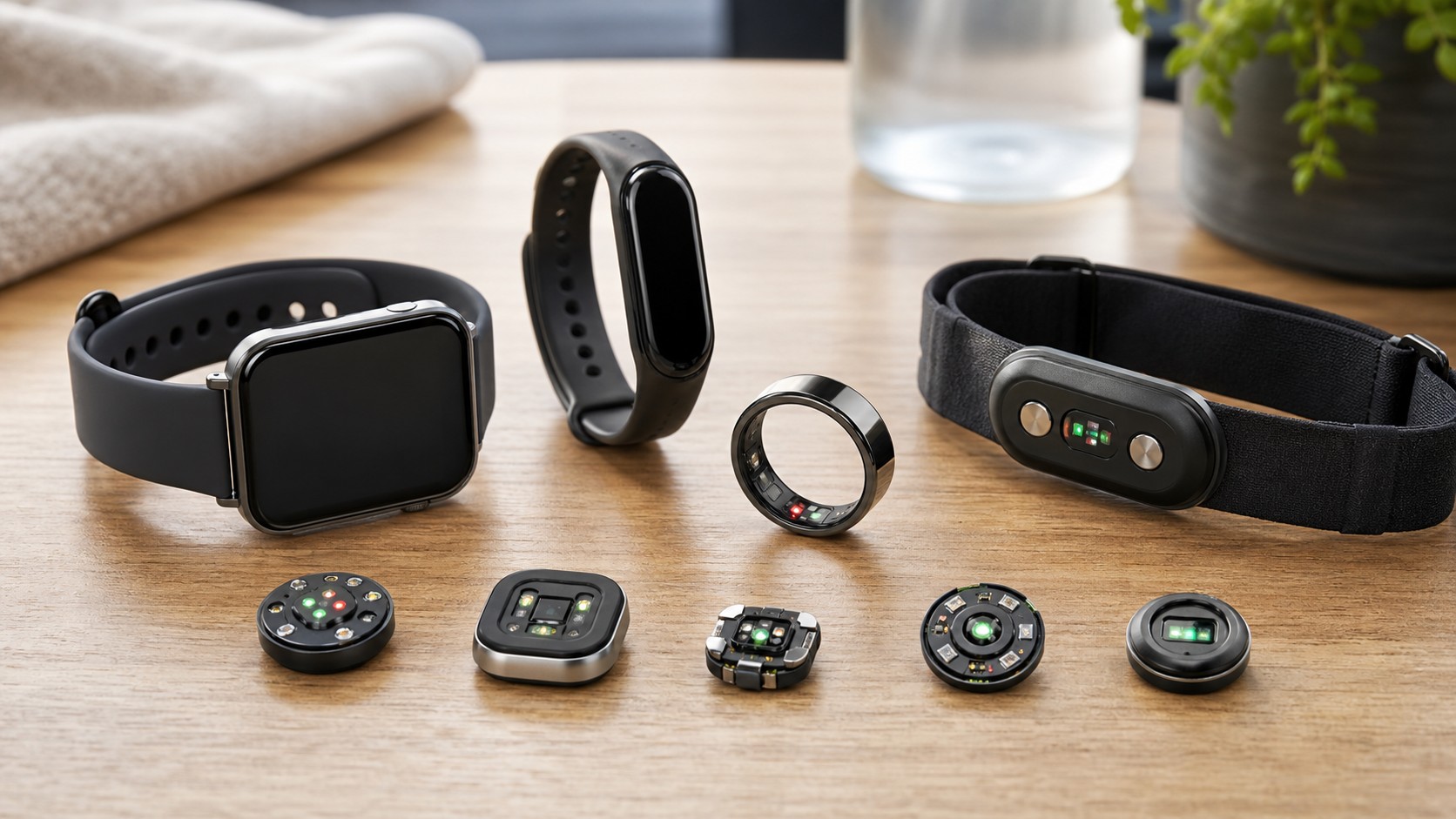
Smartwatches and fitness trackers feel simple on the wrist, but the health numbers they display come from a layered set of biometric sensors, motion sensors, and interpretation software. A basic fitness band may rely on an optical heart rate sensor and an accelerometer, while a premium smartwatch can add ECG electrodes, blood oxygen estimation, skin temperature trends, electrical skin response, barometric altitude, and body composition features. The useful way to understand these sensors is not as a single ladder from simple to advanced, but as a catalog organized by device type and job. Some sensors are built for all-day background tracking. Some are better for spot checks. Some estimate a body signal indirectly, which makes them helpful for trends over time but weak for diagnosis. A sensor can tell you that your resting heart rate is drifting upward, that your sleep schedule changed, or that your workout intensity increased. It usually cannot tell you why that happened on its own. Knowing what each sensor measures, how it measures it, and where it breaks down makes wearable data more practical and less mysterious.
A: The optical heart rate sensor is the most common biometric sensor in modern fitness bands and smartwatches.
A: No. Some models can record ECG-like traces or flag irregular rhythm patterns, but diagnosis belongs to qualified clinicians.
A: Motion, loose fit, cold skin, tattoos, sweat, and rapid intensity changes can reduce optical signal quality.
A: No. Watch SpO2 is usually a wellness estimate and is more sensitive to fit, movement, and measurement conditions.
A: Sleep staging usually combines accelerometer movement, heart rate, heart rate variability, and sometimes temperature or respiration signals.
A: No. ECG requires electrodes and regulatory choices that are usually reserved for selected smartwatch models.
A: Most wrist devices track skin temperature changes rather than core body temperature.
A: EDA measures changes in skin conductance linked to sweat gland activity, often used as a stress-response proxy.
A: Calories are calculated estimates based on sensor data, user profile details, and model assumptions.
A: A chest strap usually performs best because it measures electrical heart activity closer to the source.
Fitness Bands: Small Devices Built Around Pulse and Motion
Entry-level fitness trackers usually begin with two foundations: an optical heart rate sensor and an accelerometer. The optical sensor shines light into the skin and watches for changes in reflected light as blood volume shifts with each heartbeat. The accelerometer detects steps, arm motion, restlessness, and general activity. Together, they support the familiar dashboard of heart rate, step count, active minutes, sleep duration, and calorie estimates.
These devices are strongest at long-term routine tracking. If your resting heart rate trends lower across months, your sleep schedule stabilizes, or your daily movement drops, a fitness band can make that pattern visible. It can also separate sedentary days from active ones without needing much user input. The limitation is that many outputs are calculated rather than directly measured. Calories, sleep stages, stress scores, and recovery scores depend on algorithms layered over imperfect signals.
Fitness bands are also constrained by size, battery, and sensor placement. A loose band may miss heart rate peaks. A tight band may be uncomfortable overnight. Dark tattoos, very cold skin, and high-impact exercise can distort optical readings. For walking, daily movement, easy runs, and general wellness trends, the category is useful. For precise interval training, medical interpretation, or unusual symptoms, the same data needs context from better hardware or a clinician.
Lifestyle Smartwatches: Broad Sensor Suites for Everyday Health Checks
Lifestyle smartwatches usually carry a wider biometric catalog because they have more space, larger batteries, richer screens, and more processing power. Along with optical heart rate and motion sensors, many include ECG electrodes, pulse oximetry hardware, skin temperature sensors, barometric altimeters, microphones, GPS, and safety-oriented motion detection. The watch becomes a hub for spot checks and passive background alerts.
ECG is one of the clearest examples of a sensor that changes the role of the device. Instead of estimating pulse optically, ECG uses electrodes to record electrical activity across a short path through the body, often when the user touches the crown or bezel. In consumer watches, this can support single-lead rhythm recordings and irregular rhythm notifications. It can suggest that a pattern deserves attention, but it cannot replace a clinical twelve-lead ECG or explain chest pain, fainting, or shortness of breath.
Pulse oximetry adds another layer. Watch-based SpO2 sensors use red and infrared light to estimate blood oxygen saturation, often during sleep or a manual check. This can be helpful for noticing broad changes, especially when paired with sleep and respiratory data. It is less dependable during movement, with poor fit, or when skin and circulation conditions interfere. A low value on the wrist is a prompt to recheck carefully, not a standalone conclusion.
Temperature sensing in watches is usually about deviation, not a thermometer-style answer. Wrist devices typically monitor skin temperature trends overnight, then compare them to a personal baseline. That can support cycle tracking, illness-awareness features, or recovery insights, depending on the platform. It cannot confidently state core body temperature, identify an infection, or separate a warm room from a physiological change without additional context.
Running and Outdoor Watches: Performance Sensors With Biometric Support
Running watches, triathlon watches, and outdoor watches often put GPS, barometric altitude, compass data, and motion analysis beside biometric sensors. Their heart rate data matters, but the device is also trying to understand terrain, pace, elevation, stride rhythm, training load, and recovery. For runners, cyclists, and hikers, this creates a different sensor hierarchy from a lifestyle smartwatch.
The optical heart rate sensor still anchors zones, training load, and recovery estimates. During steady runs it can be quite useful, especially when the watch fits snugly above the wrist bone. During sprint intervals, strength training, mountain biking, or cold-weather starts, optical lag and motion noise can become obvious. Athletes who care about exact heart rate response often pair the watch with a chest strap or optical arm band.
Barometric altimeters are not biometric sensors, but they shape fitness interpretation. Climbing stairs, hiking uphill, or running a hilly route changes exertion in ways pace alone does not show. A watch that combines heart rate, elevation gain, speed, and duration can describe workout demand more fairly than a step counter. The sensor can still drift with weather changes, so elevation profiles are often cleaned up with GPS or map data.
Advanced running metrics rely on motion sensors and models. Cadence, ground contact time, vertical oscillation, stride length, and running power may come from the watch, a pod, or a strap. These values can reveal changes in form or fatigue, but they are not direct measures of muscle efficiency or injury risk. They are best read as performance clues over repeated sessions.
Recovery Bands and Rings: Sleep, Temperature, and HRV First
Some wearables are designed less like tiny phones and more like continuous recovery monitors. Bands without large screens, smart rings, and sleep-focused trackers often prioritize comfort, battery life, overnight heart rate variability, skin temperature deviation, respiratory rate, and sleep consistency. Their value comes from staying on the body long enough to establish personal baselines.
Heart rate variability, usually called HRV, is a calculated measure of variation between heartbeats. Wearables estimate it from optical pulse data or electrical measurements, often during sleep when movement is lower. HRV can reflect autonomic nervous system balance and recovery status, but it is influenced by alcohol, stress, illness, training, sleep timing, hydration, and measurement quality. A single low reading is rarely meaningful. A sustained change from your own baseline is more useful.
Rings place sensors on the finger, where blood flow can be strong and overnight comfort can be better for some users. That makes them appealing for sleep and temperature trends. The tradeoff is that rings have limited screen space, fewer interactive controls, and different fit challenges. Finger swelling, ring rotation, and cold hands can affect readings.
Stress and Body Composition Sensors: Helpful Proxies With Narrow Claims
Electrical skin response, often described as EDA or electrodermal activity, measures changes in skin conductance associated with sweat gland activity. In a wearable, it may be used during guided breathing, mindfulness sessions, or all-day stress tracking. The sensor is not reading thoughts or emotions. It is observing a physiological response that can rise during stress, excitement, heat, caffeine, exercise, or other arousal states.
Bioimpedance sensors send a tiny electrical current through part of the body to estimate tissue characteristics. In watches, this can support body composition estimates such as body fat percentage, skeletal muscle, or water-related metrics. The method is sensitive to hydration, skin contact, recent meals, exercise, and measurement posture. It can help track broad personal trends when used consistently, but it should not be treated as a lab-grade body composition scan.
Some devices claim blood pressure insights, but most wrist wearables do not directly measure cuff-style blood pressure. They may use optical signals, pulse transit time, calibration routines, or guided measurement workflows. The result can be useful for reminders and trend exploration when the device is designed for that purpose, yet it does not erase the need for validated cuffs where accuracy matters.
What Each Sensor Can and Cannot Tell You
The most practical way to read wearable data is to separate direct signals, derived metrics, and interpretations. Heart rate during rest is closer to a direct signal, though it can still be noisy. Sleep score is an interpretation built from movement, pulse, timing, and platform-specific weighting. Training readiness is even more interpretive, blending sleep, HRV, recent workouts, resting heart rate, and sometimes temperature.
Optical heart rate can tell you pulse trends, workout intensity, and recovery patterns. It cannot tell you the cause of a high heart rate by itself. ECG can capture a short electrical rhythm strip. It cannot rule out every cardiac problem. SpO2 can show oxygen saturation estimates under controlled conditions. It cannot reliably explain breathing problems from a casual wrist reading. Temperature trends can show deviation from baseline. They cannot diagnose fever with the certainty of a clinical thermometer.
Motion sensors can detect steps, falls, sleep movement, workout patterns, and changes in gait. They cannot know whether a hand movement was a step without probability and filtering. GPS can map route and pace. It cannot measure biological effort unless paired with heart rate and context. Microphones can support noise exposure or breathing-related features in some devices, but they do not provide a full respiratory exam.
How to Choose by Device Type
For general wellness, a comfortable fitness band with reliable heart rate, sleep tracking, and long battery life may provide more usable insight than a feature-heavy watch that you charge every night. The best sensor is often the one you will actually wear consistently. Consistent baselines make trend features more meaningful.
For athletes, the sensor question shifts toward accuracy during motion. A running watch with strong GPS, route tools, training load, and external strap support is usually a better match than a lifestyle watch focused on app notifications. For interval training or cycling, a chest strap can still outperform wrist optics. For hikers and trail runners, altitude, navigation, battery endurance, and durability become part of the health-data story.
For users watching heart rhythm features, ECG availability and regional support matter more than a long list of wellness scores. For sleep and recovery, comfort, battery life, overnight HRV, temperature trend quality, and clear baseline reporting matter most. For body composition curiosity, bioimpedance can be interesting, but consistency of measurement conditions is essential.
The healthiest expectation is modest but powerful: wearables are personal trend instruments. They are excellent at showing changes from your own normal, decent at summarizing routines, and increasingly good at prompting timely checks. They are weaker at explaining causes, proving diagnoses, or turning complex biology into a single score. Once you treat the sensors as a catalog of clues rather than a panel of verdicts, the data becomes more useful, calmer, and easier to act on.
The most useful device is rarely the one with the longest sensor list. It is the one that measures the signals tied to your actual goals, wears comfortably enough to collect consistent data, and explains uncertainty without pretending every reading is clinical truth. A simple fitness tracker with reliable heart-rate and sleep trends can be more helpful than a packed watch that spends half the week on a charger.