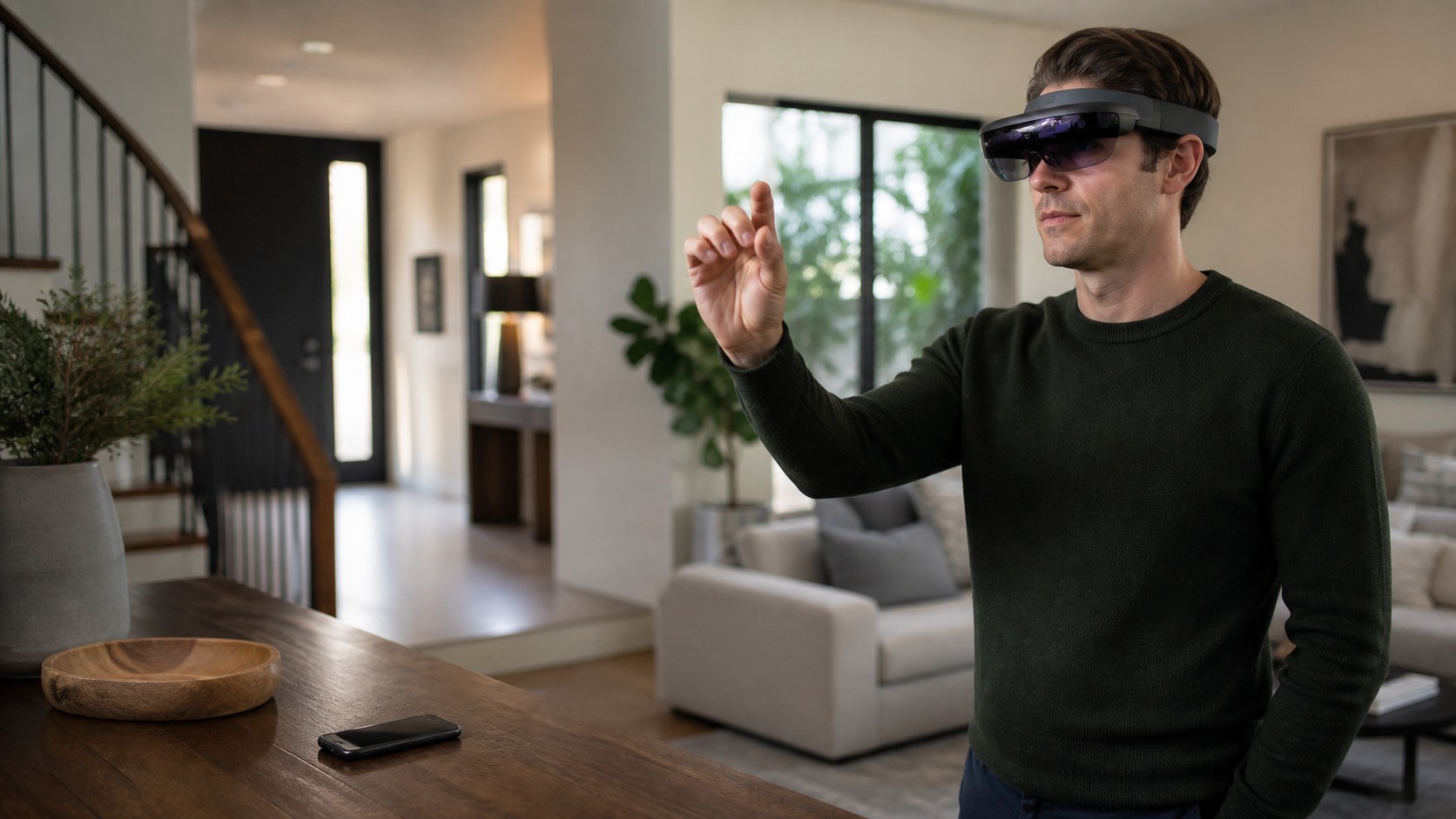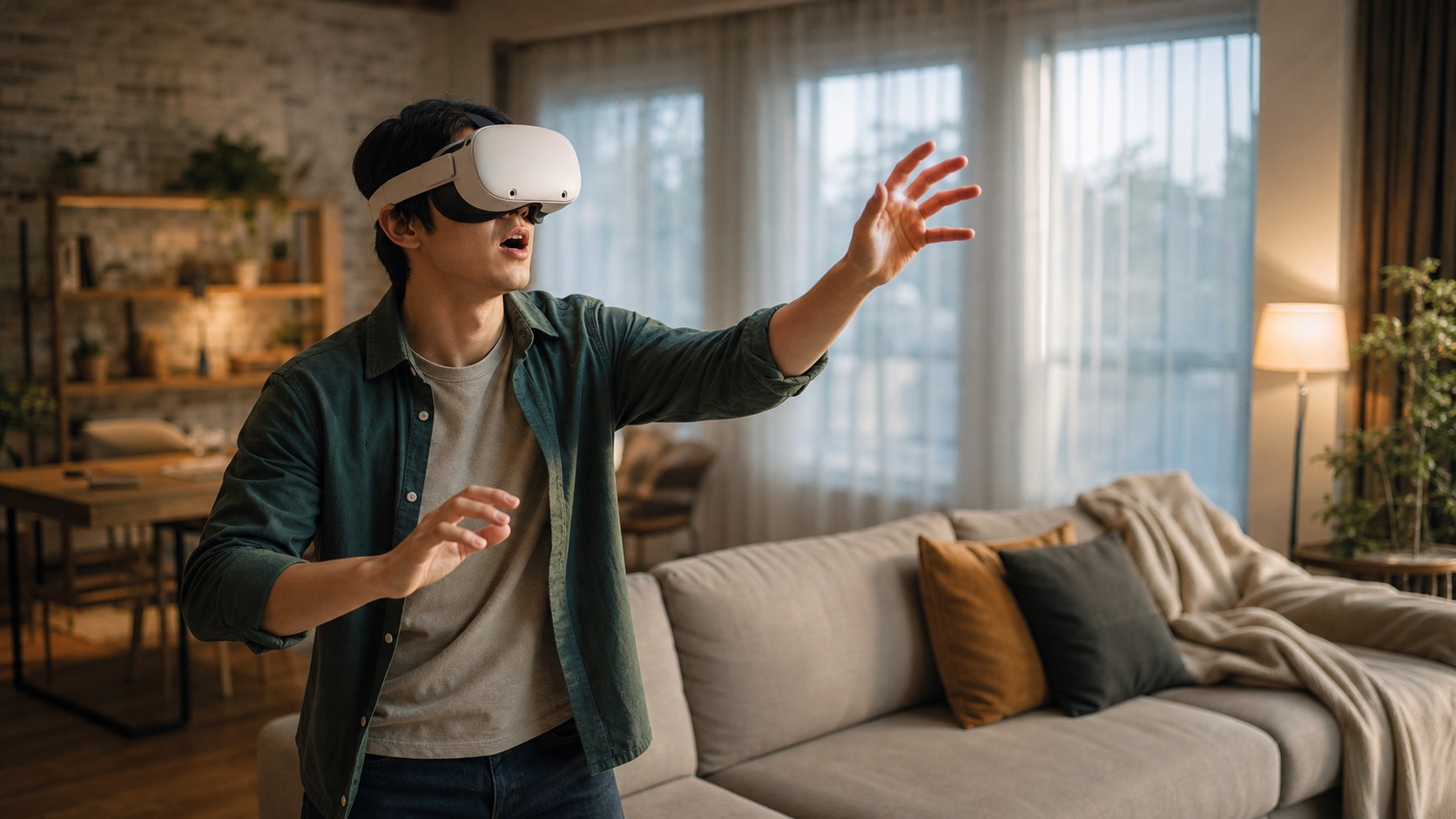
AR Glasses Are Making The Digital World Look Physical
For decades, science fiction imagined computers escaping the desk and floating directly into the world around us. AR glasses are the closest mainstream technology has come to that idea. Instead of pulling out a phone to check directions, translate a sign, identify a product, review a recipe, or glance at a message, the information can appear in the user’s field of view while life continues in front of them. That shift sounds small until it changes the rhythm of ordinary moments. A walk through a new city becomes annotated. A repair job gains floating instructions. A grocery aisle can show nutrition details, discounts, and allergy warnings without searching. A conversation across languages can carry captions in real time. The promise of AR glasses is not simply that screens become smaller or closer to the face. It is that computing starts behaving less like a separate destination and more like an invisible layer on top of the day. The challenge is making that layer useful, comfortable, socially acceptable, private, and restrained enough that everyday life still feels like life.
A: No. VR replaces your view with a virtual environment, while AR adds digital elements to the real world.
A: Many current models depend on a phone for processing, apps, connectivity, or controls.
A: Not fully. They are more likely to handle glanceable, hands-free tasks first.
A: The best models are improving, but outdoor brightness remains a major test.
A: Acceptance will depend on clear recording indicators, strong privacy rules, and social norms.
A: Yes. Captions, object recognition, navigation prompts, and visual assistance could become major uses.
A: They can be, especially for location-based and mixed-reality games, though comfort and field of view matter.
A: The balance between battery life, display quality, weight, and price.
A: Buy if you have a clear use case; wait if you expect polished smartphone-level maturity.
A: Context-aware overlays that appear only when they are genuinely useful.
The Phone Is Becoming A Background Device
The smartphone trained everyone to treat information as something retrieved by hand. You feel a buzz, unlock a screen, open an app, search, scroll, decide, then return to the physical world. AR glasses challenge that pattern by making small pieces of information available without the ritual. A turn arrow can appear at the next corner. A meeting reminder can hover quietly when you enter the lobby. A message can be read without stopping on the sidewalk.
That does not mean the phone disappears overnight. In the near term, the phone may become the power source, modem, app library, and settings panel for glasses. The visible interaction moves upward while the heavy computing remains in a pocket. This makes AR glasses less like a total replacement and more like a new front end for everyday computing.
Navigation May Be The Gateway Experience
Navigation is one of the cleanest examples of why AR can feel futuristic without being complicated. Phone maps already know where you are and where you are going, but they still ask you to divide attention between the street and a screen. Glasses can put the next turn, transit platform, building entrance, or rideshare pickup point directly where the user needs it.
The strongest version of this is not a cluttered world full of floating signs. It is a restrained visual layer that appears at the right time and fades when it is no longer needed. A subtle arrow on the pavement, a highlighted storefront, or a countdown to the crossing signal can reduce friction without making the city feel like a video game menu.
For travelers, this could become the first AR feature that feels essential. Airports, train stations, convention centers, hospitals, campuses, and stadiums are full of people who know their destination but not the path. AR glasses can turn those confusing spaces into readable environments.
Translation And Captions Could Make The World More Legible
Live translation is where AR glasses start to resemble science fiction most directly. Imagine looking at a menu in another language and seeing readable text settle over the original. Picture a museum label, subway notice, appliance manual, or street sign becoming understandable without opening a translation app. The effect is not only convenient; it changes the feeling of being in unfamiliar places.
Captions may be just as powerful. In loud restaurants, lecture halls, customer service counters, or group conversations, glasses could display speech as text near the speaker. For people who are deaf or hard of hearing, this is more than a novelty. For everyone else, it is the kind of assistive technology that quietly becomes universal once the experience is smooth enough.
Work Becomes More Hands-Free
AR glasses are especially practical when hands are busy. A technician repairing equipment can see a diagram while holding tools. A warehouse worker can follow pick instructions without carrying a scanner. A surgeon, mechanic, field engineer, or lab worker can reference data without turning away from the task. These use cases are less glamorous than holographic entertainment, but they may push the hardware forward faster.
For office workers, the value is more selective. Floating monitors sound exciting, but wearing glasses all day just to recreate a desktop may not be enough. The better office uses are likely glanceable: meeting notes, live transcription, presentation prompts, quick data lookups, and remote collaboration where someone can see what you see.
The workplace will also force companies to answer hard policy issues early. Recording, employee monitoring, customer consent, confidential screens, and data retention all become more complicated when cameras and overlays are worn on the face.
That pressure may be useful. Enterprise buyers tend to demand security, admin controls, and measurable productivity. Those requirements could make consumer AR glasses more trustworthy later.
Shopping Turns Into A Layered Experience
Retail is one of the most obvious places for daily AR overlays. A shopper could compare prices, see reviews, check compatibility, scan ingredients, or identify a better size without juggling a phone. In a hardware store, glasses could guide someone to the right aisle and confirm that a part matches the project. In a grocery store, they could flag allergens or highlight items that fit a meal plan.
The risk is overload. If every product becomes a billboard, AR shopping will feel exhausting. The winners will be systems that understand intent. Someone browsing casually needs less data than someone comparing two expensive headphones or checking whether a replacement filter fits a specific appliance.
There is also a commercial tug-of-war coming. Retailers, platforms, and brands will all want control over what appears in the lens. Consumers will need settings that separate helpful information from paid clutter.
Entertainment Gets Smaller, Closer, And More Personal
AR entertainment will not only be about dragons on coffee tables or giant holograms in the living room. The everyday version may be quieter: a private video screen on a plane, game elements placed on a desk, sports stats near the TV, or a shared digital object visible to friends wearing compatible devices. The appeal is that digital media can occupy space without requiring a dedicated monitor.
Games may become more physical as AR matures. Instead of sitting in front of a screen, players could move through rooms, parks, and streets while digital characters and goals respond to real surroundings. Fitness apps can turn running routes into guided challenges. Music apps can place controls near instruments. Cooking apps can keep timers and steps anchored near the stove.
The social side is trickier. Shared AR needs standards, accurate mapping, and trust. If two people cannot see the same object in the same place, the illusion breaks. If the glasses are too isolating, the experience becomes another private screen rather than a richer shared space.
Privacy Is The Problem Everyone Can See
AR glasses introduce a social challenge that phones never fully solved: people may not know when they are being recorded, analyzed, or identified. A camera on eyewear feels different from a phone held in the hand because it points wherever the wearer looks. Even if a device is designed responsibly, the public may assume the worst unless recording indicators and norms are obvious.
Face recognition is the most sensitive frontier. Glasses that identify strangers, pull up social profiles, or infer personal details would create a world many people do not want to live in. The most successful consumer AR platforms may be the ones that refuse certain capabilities by default, even if technically possible.
Data handling matters as much as hardware design. If glasses constantly process surroundings, users deserve to know what is stored, what leaves the device, how long it is retained, and whether it trains future systems. A clear privacy light is helpful, but it is only the visible tip of a much larger trust structure.
Social acceptance will probably arrive unevenly. People may welcome AR glasses for accessibility, work, travel, and fitness while rejecting them in bathrooms, classrooms, confidential meetings, and private gatherings. The technology will need manners as much as specs.
The Design Has To Become Boring In The Best Way
For AR glasses to become normal, they must stop looking like prototypes. Weight, heat, battery life, lens clarity, prescription support, and frame style are not secondary details. They are the product. Nobody wants a magical overlay badly enough to tolerate sore temples, dim text, awkward charging, or a design that makes every room react.
The ideal pair will feel almost ordinary until the display turns on. That is a difficult engineering target because AR needs cameras, sensors, speakers, microphones, batteries, wireless chips, and display optics in a frame people will wear on their face. Every gram matters. Every glow, reflection, and cable changes the social signal.
AI Makes The Overlay Smarter
Artificial intelligence is what could keep AR glasses from becoming a floating notification machine. The glasses need to understand context well enough to decide when to help and when to stay quiet. If you are cooking, they might show the next step. If you are walking into a meeting, they might surface the agenda. If you are looking at a broken device, they might identify the model and suggest a repair path.
The danger is overconfidence. An assistant that misreads a street sign, mistranslates a warning, or gives bad repair guidance can cause real problems. AR feels authoritative because it appears directly on the world. That makes accuracy, uncertainty, and source transparency crucial.
The best systems will probably behave more like careful assistants than know-it-all narrators. They will offer lightweight help, show confidence when needed, and make it easy to dismiss overlays instantly.
The Best Overlay Knows When To Leave
The real breakthrough may be restraint. A useful pair of AR glasses should know the difference between a moment that needs help and a moment that should stay untouched. Directions can appear at intersections, not every step. Shopping details can surface when a product is compared, not across an entire aisle. Fitness stats can stay near the edge of vision instead of covering the trail. The same principle applies at dinner, on a date, in a classroom, or during a quiet walk. If AR glasses treat attention as something valuable, they can feel less like another screen demanding loyalty and more like a tool that steps forward only when the world becomes easier to navigate with a little digital context.
Everyday Science Fiction Is Arriving Gradually
AR glasses will not transform daily life in one dramatic launch. The shift will happen through small habits that become hard to give up: looking up directions without looking down, reading captions in a noisy room, fixing something with instructions in view, watching a private screen while traveling, or understanding a sign in another language at a glance.
That gradual path is what makes the category interesting. The most important AR experiences may not look spectacular in a demo. They may feel useful, calm, and almost obvious once they work. Science fiction usually imagines technology as dazzling. Real AR glasses may succeed when the digital layer becomes quiet enough to trust, helpful enough to miss, and ordinary enough to wear out the door.