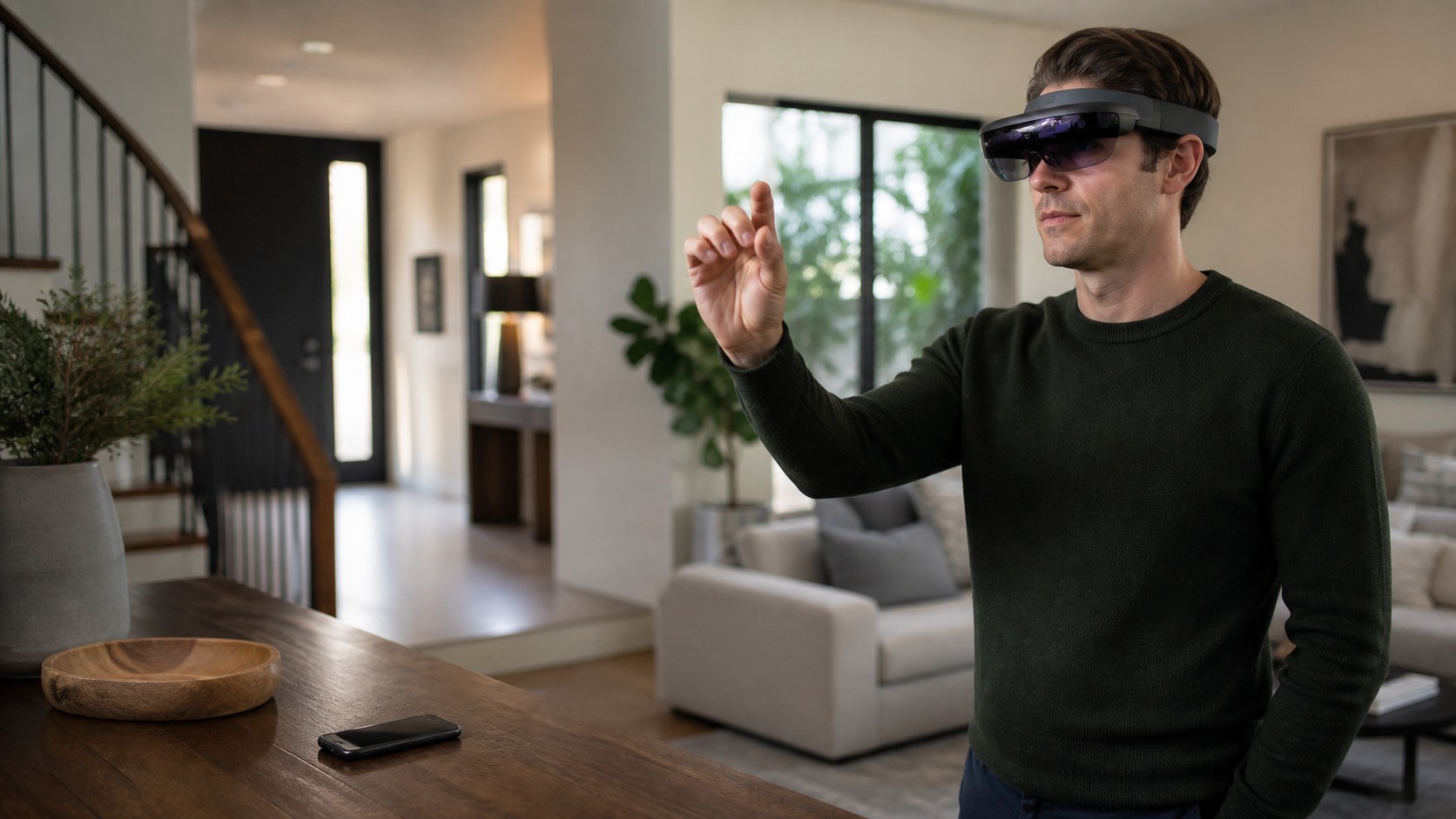
AR Headsets Are Finally Aiming At Your Pocket
For years, augmented reality headsets sounded like the kind of technology that lived just beyond the next product cycle: impressive in demos, awkward in public, and not quite useful enough to replace the glass slab already in your hand. That is starting to change. The new wave of spatial devices is not only chasing better games or flashier virtual workspaces; it is aiming at the daily jobs smartphones quietly own, including navigation, messaging, calls, photography, search, translation, shopping, fitness, and quick bursts of entertainment. The path will not be instant, and nobody should expect everyone to toss their phones into a drawer next year. Still, the pieces are lining up faster than many people expected. Displays are shrinking, AI assistants are getting more useful, batteries are improving, and big tech companies are treating face-worn computing as the next platform battle. The most interesting AR headsets are not trying to be “phones on your face” in a literal sense. They are trying to make screens feel less like objects you pull out and more like information that appears when the moment calls for it.
A: Not immediately. They are more likely to take over common phone tasks first.
A: Apple and Meta are the most visible, but Google, Samsung, and several display-glasses brands matter too.
A: Not always. Some show full spatial graphics, while others focus on audio, cameras, and AI.
A: Some already do, but clear privacy signals and social norms will be essential.
A: Comfort. A device cannot replace a phone if people do not want to wear it.
A: Many early models will. A phone can provide connectivity, processing, secure login, and a fallback screen.
A: Some apps may become spatial services, especially maps, messaging, translation, shopping, fitness, and search.
A: That depends on display brightness, lens design, battery life, and how well cameras read real-world surroundings.
A: Not by themselves. They are useful private screens, but phone replacement also needs sensors, AI, input, and mobility.
A: A mix of normal-looking design, useful AI, reliable battery life, fair pricing, and everyday tasks that feel faster than a phone.
Why The Smartphone Is Suddenly Vulnerable
The smartphone still feels unbeatable because it is excellent at being a pocket computer. It has a bright display, a powerful chip, a camera, mobile payments, maps, messaging, and a huge app ecosystem. Yet its biggest strength is also its limitation: everything happens on a small rectangle that demands your hand, your gaze, and a little pocket ritual every time you use it. AR headsets attack that friction. They promise glanceable directions while walking, translation over a sign, a message preview during a grocery run, or a video call that does not require balancing a phone at arm’s length.
The timing is important. Voice assistants used to be too brittle to carry a new interface. Now AI systems can summarize, answer, search, identify objects, and follow more natural commands. That gives AR hardware a brain it did not have during earlier attempts. Instead of tapping through tiny floating menus, users may simply ask for the next train, compare two products on a shelf, or capture what they are seeing.
The Devices Leading The Shift
The category is splitting into two lanes. The first is the full spatial computer, represented by devices like Apple Vision Pro and other mixed-reality headsets. These can place large displays around a room, run immersive apps, and blend digital objects with the physical world. They are powerful, but they are still closer to a home, office, or travel device than something most people wear all day.
The second lane may be more disruptive: lighter smart glasses. Meta’s Ray-Ban glasses have already shown that people will wear camera-and-audio glasses if they look familiar enough. They do not replace a phone screen yet, but they normalize face-worn capture, voice commands, open-ear audio, and AI help. Display glasses from Xreal and similar brands take another angle by giving users a huge private screen for video, games, or laptop work. They are not complete AR replacements either, but they prove that eyewear can become a display layer.
The real phone challenger will likely blend these lanes: slim glasses with a useful display, AI assistance, cameras, speakers, microphones, and a phone or cloud connection doing some of the heavy processing. That is why prototypes from Meta, Android XR projects from Google and Samsung, and whatever Apple builds after Vision Pro are worth watching closely.
What Phone Replacement Actually Means
Replacing a smartphone does not mean copying every app into the air. Many phone habits are already short, repetitive, and context driven. You check a message, unlock a door, see who is calling, look up a route, scan a code, take a photo, confirm a payment, or ask a quick search query. Those moments are perfect targets for AR because they do not need a full app grid. They need fast, clear, low-friction answers.
Longer tasks are more complicated. Writing a detailed email, editing photos, shopping through dozens of options, or managing bank settings still benefits from a traditional screen. For several years, the phone may become the silent partner: powering the glasses, handling secure logins, storing media, and offering a fallback for anything too detailed for a wearable display.
That hybrid stage is still a major shift. If glasses handle half the interactions that currently pull your phone out of your pocket, the phone becomes less central to daily attention. Platform power follows attention. Once developers see users spending meaningful time inside spatial interfaces, apps will change around that behavior.
There is also a generational angle. People who grew up with phones may see headsets as optional accessories, while younger users may accept wearable cameras, voice-first controls, and floating screens more quickly. The replacement curve could look less like one dramatic launch and more like wireless earbuds: odd at first, normal everywhere a few years later.
The Interface Has To Become Invisible
The hardest part is not showing apps in midair. It is deciding when not to show them. A smartphone is visually contained; AR can become exhausting if every notification, button, and widget competes with the real world. The best systems will be disciplined. They will keep information tucked away until it is useful, then make it disappear without demanding cleanup.
Voice will carry much of that burden, but voice alone is not enough. People will not dictate every command in public. Eye tracking, small hand gestures, touch-sensitive temples, rings, watches, and phone touchpads could all become part of the control mix. The goal is not one perfect input method. It is a set of controls that feel natural in different places: quiet on a train, precise at a desk, hands-free while cooking, and discreet while walking.
AI also changes how apps are arranged. Instead of opening separate apps for maps, reviews, translation, and messaging, a spatial assistant could combine them in a single moment. Imagine looking at a restaurant and asking whether it has outdoor seating, whether your friend would like it, and how long the walk is. That is the kind of contextual computing a phone can do, but AR can make it feel immediate.
Comfort Will Decide The Market
No spec sheet can overcome an uncomfortable wearable. A headset that pinches, heats up, ruins hair, blocks peripheral vision, or looks too strange will remain a niche device, even if the software is brilliant. Mainstream users are not asking for a science-fiction helmet. They want something closer to normal glasses, ideally with prescription support, decent battery life, and enough style options that wearing them does not feel like announcing a product demo.
Battery life is the stubborn tradeoff. Bright displays, cameras, AI processing, speakers, and wireless connections all demand power. Companies may solve this through external battery packs, phone offloading, custom chips, swappable frames, or displays that activate only when needed. The first widely loved AR glasses may not run all day at full power. They may succeed by being extremely good during the moments people actually need them.
Price is another filter. Premium spatial computers can introduce the technology, but phone replacement needs phone-adjacent pricing or carrier-style financing. The public will tolerate a costly device if it clearly replaces other purchases. If it feels like an accessory to an already expensive phone, adoption slows.
Privacy Could Make Or Break Everyday AR
AR headsets face a social test that phones already passed. People understand phone cameras, even if they dislike being filmed. Face cameras feel different because they are pointed wherever the wearer looks. That creates discomfort in offices, schools, gyms, bars, and private conversations. Visible recording lights, physical camera covers, local processing, clear consent cues, and strong rules for sensitive spaces will matter as much as display resolution.
The companies that win trust will likely make privacy obvious rather than hidden in settings. A bystander should know when recording is happening. A wearer should know when an app is analyzing the room. Employers, venues, and families will need norms for when glasses are welcome and when they come off.
There is a positive side as well. AR could reduce some phone behaviors people already dislike, such as walking while staring down, filming concerts through a raised screen, or constantly checking notifications during conversation. A considerate design could make technology less physically intrusive, even though the sensors are more intimate.
The App Ecosystem Will Be The Tipping Point
Hardware usually gets the spotlight, but the real replacement race will be fought in software. People will not switch because a headset can open a floating browser. They will switch when the services they already use feel better in spatial form. Maps should show the next turn without making someone stare at a corner of the screen. Shopping apps should compare specs while the product is in front of them. Messaging should be quick enough to handle with a glance, a short reply, or a quiet tap on the frame.
Developers will also need to stop thinking of AR as a place to paste phone screens. The best experiences will be smaller, more situational, and more aware of surroundings. A travel app might surface gate changes at the airport, then vanish. A fitness app might correct posture during a workout, then become an audio coach. A browser might become less important than an assistant that pulls answers from several services and presents only what fits the moment.
That creates a familiar platform loop. Better apps make the headset more useful, more users attract developers, and stronger developer tools make new habits easier to build. Once that loop starts, the smartphone loses exclusivity over the quick interactions that made it indispensable.
So, How Soon Is “Sooner Than You Think”?
The next few years are likely to bring rapid improvement, but not instant phone extinction. First, smart glasses will become better companions for photos, calls, audio, navigation, and AI search. Next, display glasses will become lighter and more useful outdoors. After that, the strongest products will merge these abilities into everyday AR glasses that can handle enough tasks to leave the phone untouched for long stretches.
For mainstream readers, the practical takeaway is simple: do not judge the future only by today’s bulky headsets. The replacement threat is coming from several directions at once: premium spatial computers proving new interface ideas, fashionable smart glasses making wearables socially normal, AI assistants reducing the need for app tapping, and phone makers looking for the next major hardware cycle.
The smartphone will probably survive as a hub, camera, wallet, and backup screen longer than futurists expect. But its role as the center of personal computing is less secure than it looks. When the right AR headset becomes comfortable enough to wear, useful enough to trust, and private enough for public life, the phone may stop being the first screen people reach for. That is the real replacement moment: not when the phone disappears, but when it becomes optional for the everyday tasks that once made it feel impossible to live without.
The pocket shift is already beginning quietly.