When Virtual Reality Starts Feeling Uncomfortably Real
Virtual reality used to be easy to dismiss as a clever screen strapped to your face. The picture was grainy, the controllers felt awkward, and the best trick most headsets could manage was making you duck when a digital object flew too close. That era is fading fast. Modern VR can place you on a mountaintop, inside a racing cockpit, beside a dinosaur, in the middle of a firefight, or face-to-face with a colleague across the world with enough sensory detail that your brain briefly accepts the scene as a place. Better displays, wider fields of view, spatial audio, hand tracking, haptic feedback, mixed reality passthrough, and smarter software design are making immersive experiences feel less like demos and more like destinations. The most convincing VR does not simply show you another world. It gives you scale, presence, timing, body awareness, and the strange little moments that make your instincts react before your logic catches up.
A: Yes, especially when tracking, audio, scale, and interaction all work together.
A: No. Training, travel, fitness, design, education, and live events are major uses.
A: Not always. Standalone headsets now offer strong immersion without a gaming PC.
A: Accurate motion, convincing depth, responsive objects, and sound that matches the space.
A: It cannot replace every sensation, but it can make distant places feel surprisingly close.
A: It can be, though better frame rates and comfort options help many users.
A: Many rhythm, boxing, and fitness apps can deliver serious cardio.
A: Yes. Blending real rooms with digital objects makes headsets useful beyond full escape.
A: Sometimes, but expressive avatars and spatial audio make shared spaces feel more natural.
A: Seated travel, rhythm games, short stories, and calm exploration apps are friendly starts.
The Secret Ingredient Is Presence
The word people reach for after a great VR session is usually “presence.” It means your mind has stopped treating the headset as a display and has started treating the experience as a place. Presence happens when your visual field, head movement, hand position, sound, and timing agree closely enough that your body trusts the illusion. You may know you are standing in a living room, but your knees still soften when you step to the edge of a virtual cliff.
That reaction is not childish imagination. It is the brain doing what it has always done: building reality from signals. VR becomes powerful when those signals are coordinated. A distant waterfall sounds distant. A nearby robot leans into your personal space. A ball you throw travels with believable weight. A dark corridor feels narrow because the walls remain stable as you turn your head. The headset is not just showing a scene; it is feeding your senses a coherent argument.
Scale Is the Detail Screens Cannot Fake
One reason VR can feel startling is that it restores scale. A dragon is not just large because the camera frames it that way; it towers above you, blocks your view, and forces your neck to tilt. A museum sculpture can be studied from inches away, then circled like an object with mass. A virtual apartment can feel cramped or open before a single measurement appears. This is especially valuable for mainstream users because scale is easy to understand instantly. You do not need to read a spec sheet to feel the difference between watching a room and standing inside it. When developers combine scale with believable hand reach, floor height, and object distance, VR gains a physical grammar that ordinary screens rarely deliver.
Gaming Is Still the Showcase
Games remain the easiest way to understand why VR feels different from flat-screen entertainment. On a TV, you watch a character reload a weapon, swing a sword, climb a wall, or dodge an attack. In VR, those actions ask something from your body. You look over your shoulder, raise your hands, crouch behind cover, lean around corners, and reach for objects at human scale. Even simple mechanics become memorable when they happen around you instead of in front of you.
The best VR games do not rely only on spectacle. They use physicality. A horror game feels sharper when the sound of footsteps comes from behind your left ear. A rhythm game becomes addictive when every beat has arm movement, color, impact, and flow. A puzzle room becomes more intimate when you can pick up strange devices and inspect them like props on a table. VR turns attention into action, and that gives familiar genres a new pulse.
Simulation fans may feel the biggest leap. Flight, racing, and space games gain instant credibility when the cockpit surrounds you. Mirrors, gauges, windows, and distance all sit where your body expects them. A tight turn in a racing sim can make your shoulders tense even without a moving seat. Add a steering wheel, HOTAS controls, or haptic accessories, and the boundary between game and simulator begins to blur in a very convincing way.
Training Without Real-World Consequences
VR training works because it can create pressure without creating danger. A firefighter can practice moving through smoke. A surgeon can rehearse a procedure. A warehouse worker can learn equipment flow. A public speaker can face a room full of virtual listeners before stepping onto a real stage. These scenarios are useful because they combine repetition with emotion. People remember what they do, especially when the setting feels close enough to raise their heartbeat.
Virtual Travel Is Becoming More Than a Slideshow
Travel-focused VR has matured beyond 360-degree postcards. The strongest experiences now use guided narration, 3D capture, photogrammetry, volumetric video, and interactive movement to create the feeling of being inside a location rather than looking at a bubble-shaped photo. You can stand inside a famous museum, float near a coral reef, visit a reconstructed ancient city, or walk through a destination before booking a trip.
It still cannot give you the smell of street food, the temperature of desert air, or the fatigue of climbing real stairs. Yet it can offer access where physical travel is expensive, difficult, crowded, or impossible. For schools, families, older adults, and anyone curious about the world, that matters in a very practical way. VR travel is not a replacement for going somewhere. It is a new category between watching and visiting.
Entertainment Is Getting More Personal
Concerts, comedy shows, theater performances, and sports broadcasts are all experimenting with immersive formats. The appeal is obvious: instead of watching from a fixed camera angle, you can feel positioned near the stage, courtside, backstage, or inside a stylized world designed around the event. Spatial audio makes applause, music, and crowd noise feel less flattened. Avatars can make remote attendance feel shared instead of solitary.
This is where VR’s future may surprise mainstream audiences. A virtual concert does not need to imitate a physical arena. It can change scale, shift environments between songs, place animated effects around the crowd, and give every attendee a view that would be impossible in a real venue. The most memorable entertainment may not be the version that copies reality perfectly. It may be the version that uses reality as a starting point.
Sports could become especially compelling as camera systems improve. Imagine reviewing a play from the field, watching a race from inside the cockpit perspective, or standing near a training session with full depth and scale. Fans already pay for proximity. VR can create a new kind of proximity that travels through a headset.
Social VR Makes Distance Feel Smaller
Social VR can sound odd until you try a good room with natural voice chat and expressive body movement. A small shift happens when someone’s voice comes from the direction of their avatar, when people gather around an object, or when a group turns toward the same event at once. It feels closer to being with people than a video grid does, even when the avatars are stylized.
The strongest social spaces give people something to do together. Drawing in 3D, watching films, playing mini-games, attending meetups, building worlds, or reviewing a product model gives the room purpose. Without that shared activity, social VR can feel like a lobby. With it, the space starts behaving like a memory.
The Hardware Is Finally Catching Up
Much of the leap comes from better headset design. Higher-resolution displays reduce the screen-door effect. Pancake lenses improve clarity and shrink headset size. Inside-out tracking removes the need for external sensors. Color passthrough lets digital objects appear in your real room. Eye tracking can improve performance by sharpening the area where you are looking while reducing detail in your peripheral vision.
Comfort is just as important as visual quality. A headset that feels heavy after twenty minutes will break immersion no matter how beautiful the world looks. Balanced straps, breathable face interfaces, prescription lens inserts, and lighter designs make VR more welcoming for people who do not want to wrestle with gear before relaxing into an experience.
Controllers are changing too. Traditional motion controllers remain excellent for games, but hand tracking makes casual interaction feel more natural. Pinching, pointing, grabbing, and swiping without controllers can make menus, creative apps, and mixed reality tools feel less technical. Haptics still have a long way to go, but even simple vibration can make contact feel more believable when it arrives at the right moment.
Mixed Reality May Be the Bridge for Everyone Else
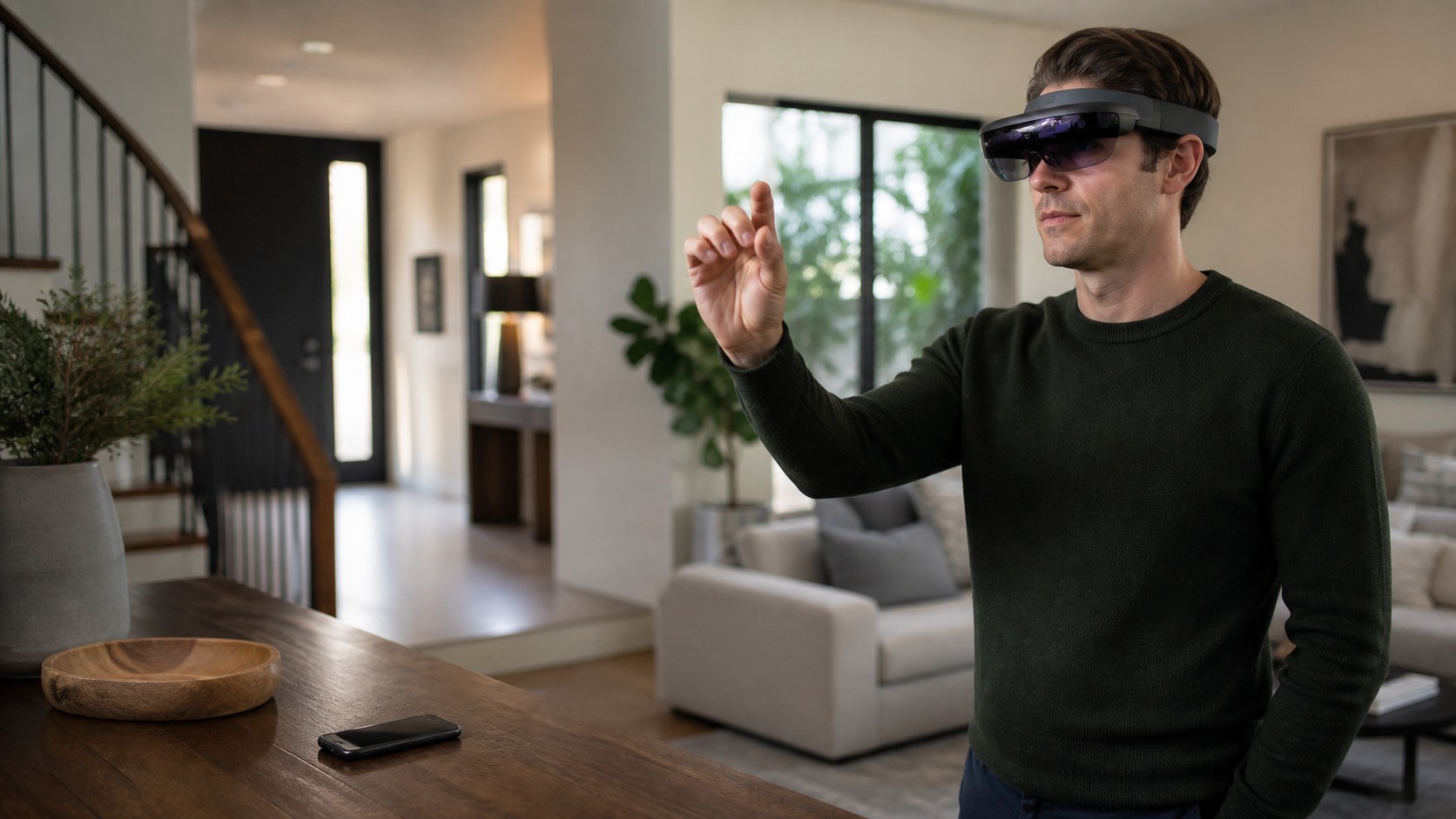
Full VR asks you to leave the room. Mixed reality lets the room come with you. That difference could make headsets more comfortable for mainstream users who like immersion but dislike feeling sealed away. With passthrough cameras, your coffee table can become a game board, your wall can become a giant display, and your desk can hold floating controls beside a real keyboard.
The Limits Are Still Real
Even the best VR has friction. Some people feel motion sickness. Some headsets are expensive. Battery life can interrupt long sessions. Shared household use can be awkward. Wearing a device on your face is still a bigger commitment than picking up a phone or turning on a TV. Great VR has to overcome all of that quickly, usually within the first minute.
There are also social and emotional limits. Realism can be intense. Horror, combat, heights, and medical simulations may affect people more strongly in VR than on a screen. Designers need to respect comfort, consent, personal space, and clear exits from stressful experiences. Immersion is powerful precisely because the mind responds to it, so responsible design is part of the product, not an optional extra.
What to Try First
If you are new to VR, start with experiences that show presence without overwhelming you. A seated travel app, a rhythm game, a short interactive story, or a calm creative tool can demonstrate the magic without pushing your balance too hard. Once you know how your body responds, move into faster games, fitness sessions, social spaces, and simulators.
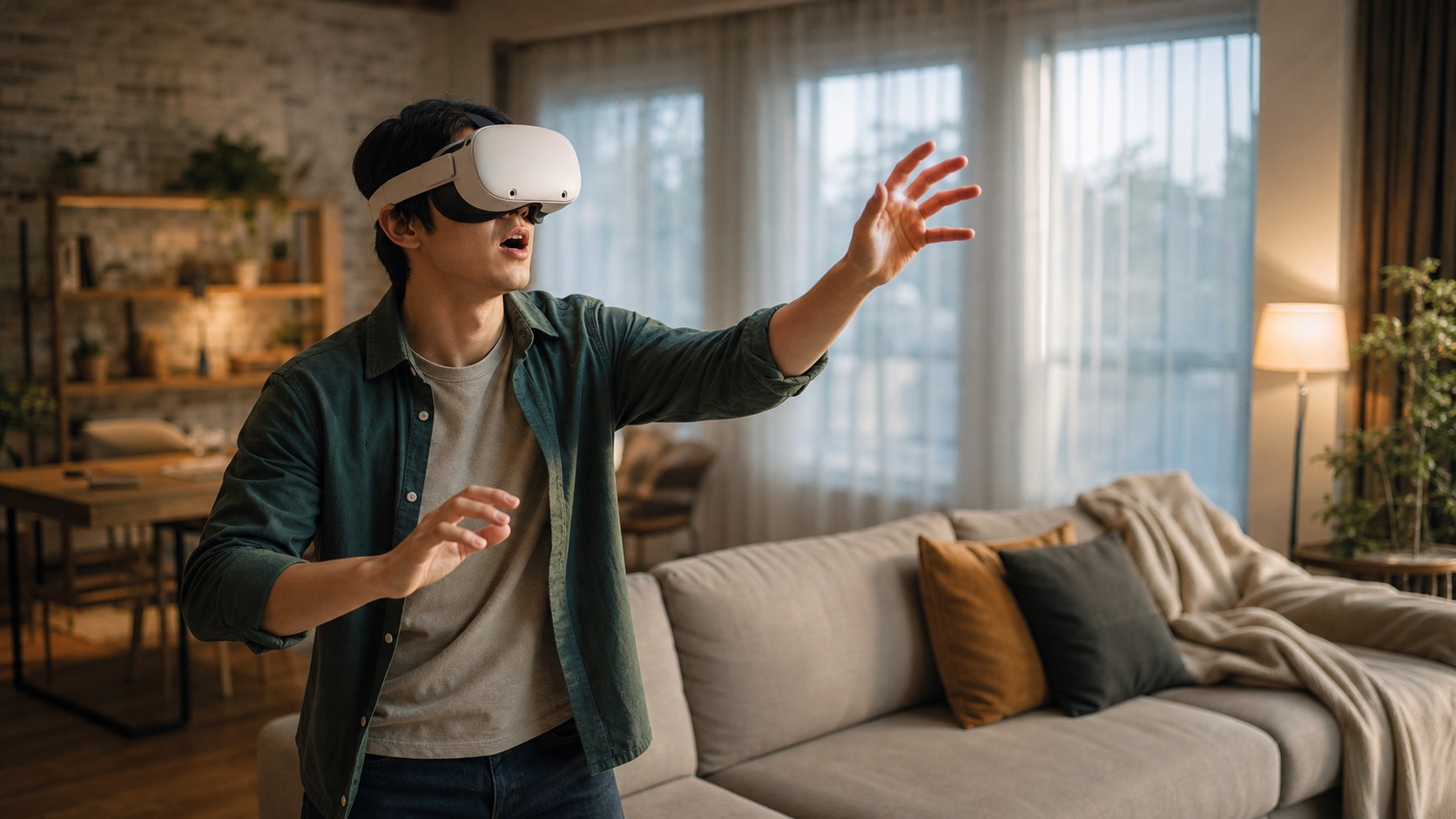
The best first VR experience is not always the most technically advanced one. It is the one that makes you forget the headset for a moment. Maybe you reach out to touch something that is not there. Maybe you flinch when an object passes close. Maybe you look down from a digital balcony and feel your stomach dip. That tiny betrayal by your own senses is the thrill. It means the virtual world has crossed from image into experience.
VR is not replacing reality, and it does not need to. Its real promise is giving people access to moments that would otherwise be too distant, too dangerous, too expensive, or too impossible to attempt. Games can become places. Training can become lived practice. Travel can become more accessible. Entertainment can surround you. When all the pieces work together, VR does something rare for a technology product: it makes the familiar act of looking feel new again.
That feeling lingers afterward.