Smart Glasses Are Coming for the Phone’s Most Valuable Job
Smartphones are not disappearing overnight, but their role is starting to change. For years, the phone has been the remote control for modern life: camera, map, wallet, messenger, search box, music player, translator, and boredom machine. Smart glasses now want the most important parts of that job without asking you to stare at a rectangle every few minutes. The shift is not only about futuristic augmented reality. It is about tiny, everyday moments where glasses are faster than pulling out a phone: hearing a message, taking a photo, asking for directions, translating a sign, joining a call, checking a reminder, or getting an answer while your hands are busy. The first wave still has limits, but the direction is clear. If smart glasses keep getting lighter, cheaper, more private, and more capable, the smartphone may become less of a constant companion and more of a pocket computer you use when a bigger screen is genuinely better.
A: Not completely, but they can replace many quick interactions.
A: No. Many focus on audio, camera, and AI without a screen.
A: They are best for spontaneous, hands-free moments.
A: Yes, but glasses may reduce how often you open them.
A: Good design makes them feel closer to normal eyewear.
A: Many major models offer prescription options.
A: Yes, especially around cameras, audio, and AI processing.
A: Yes, for audio, calls, capture, and navigation.
A: Hands-free AI assistance is likely the biggest one.
A: Buy now for convenience; wait for better displays and battery life.
The Phone Is Becoming Too Much Device
The smartphone won because it combined a dozen gadgets into one pocketable screen. That same strength is now its weakness. Every task, from checking the weather to paying for coffee, has to compete with alerts, feeds, ads, and endless app layers. Many people do not want a more powerful phone as much as they want a calmer way to get things done.
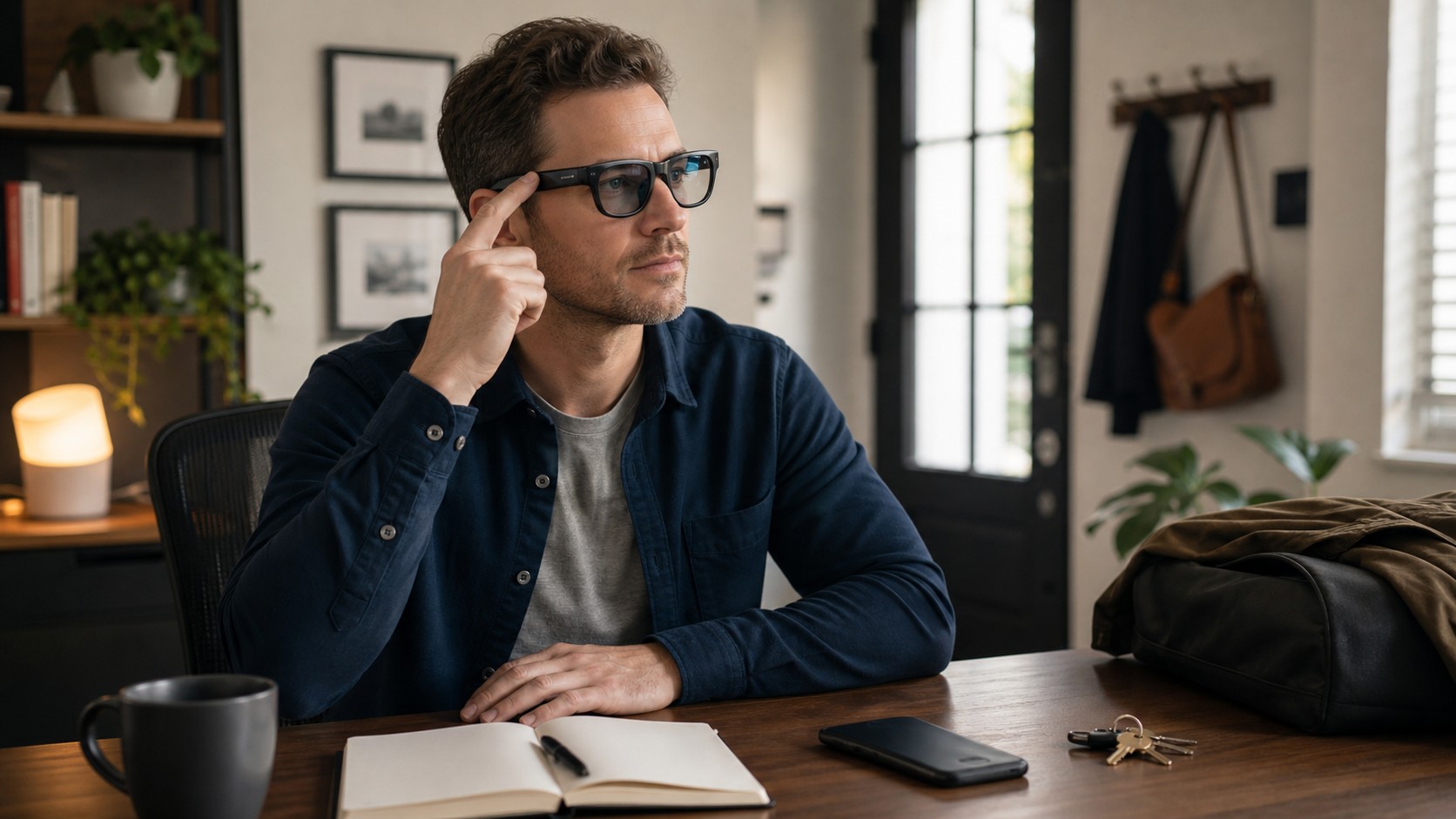
Smart glasses attack that problem by moving the shortest interactions closer to your senses. A voice assistant can answer while you cook. A camera can capture what your hands are doing. Directions can arrive as audio cues or light visual prompts. Messages can be heard instead of opened. None of that requires a full-screen session.
That is the key difference. Smart glasses are not trying to be a smaller phone on your face. The better version is a filter between you and your phone, handling lightweight tasks before they turn into screen time.
AI Makes Glasses More Useful Than Old Wearables
Earlier smart glasses often felt like tech demos because they needed you to know exactly what to ask for. Modern AI changes the interaction. Instead of tapping through menus, you can ask what you are looking at, dictate a reply, summarize a message, identify an object, translate text, or get help choosing between options in front of you.
This is where glasses have a natural advantage over phones. A phone needs to be aimed, unlocked, held, and managed. Glasses already share your view. When the assistant can understand voice, camera input, location, and context together, it becomes less like an app and more like a useful layer over daily life.
Displays Are Helpful, but They Are Not the Whole Story
Many consumers imagine smart glasses replacing phones only when they project a full virtual screen into the air. That may happen eventually, but the near-term replacement path is quieter. Audio-first glasses can already take over calls, music, photos, short videos, reminders, and AI queries. Display models add glanceable directions, captions, notifications, and simple controls, but they do not need to recreate the entire smartphone interface.
The phone screen is still better for reading long articles, editing documents, shopping carefully, watching shows, and handling sensitive tasks. Smart glasses are stronger when the job is brief, urgent, physical, or situational. The more a task depends on your surroundings, the more sense glasses make.
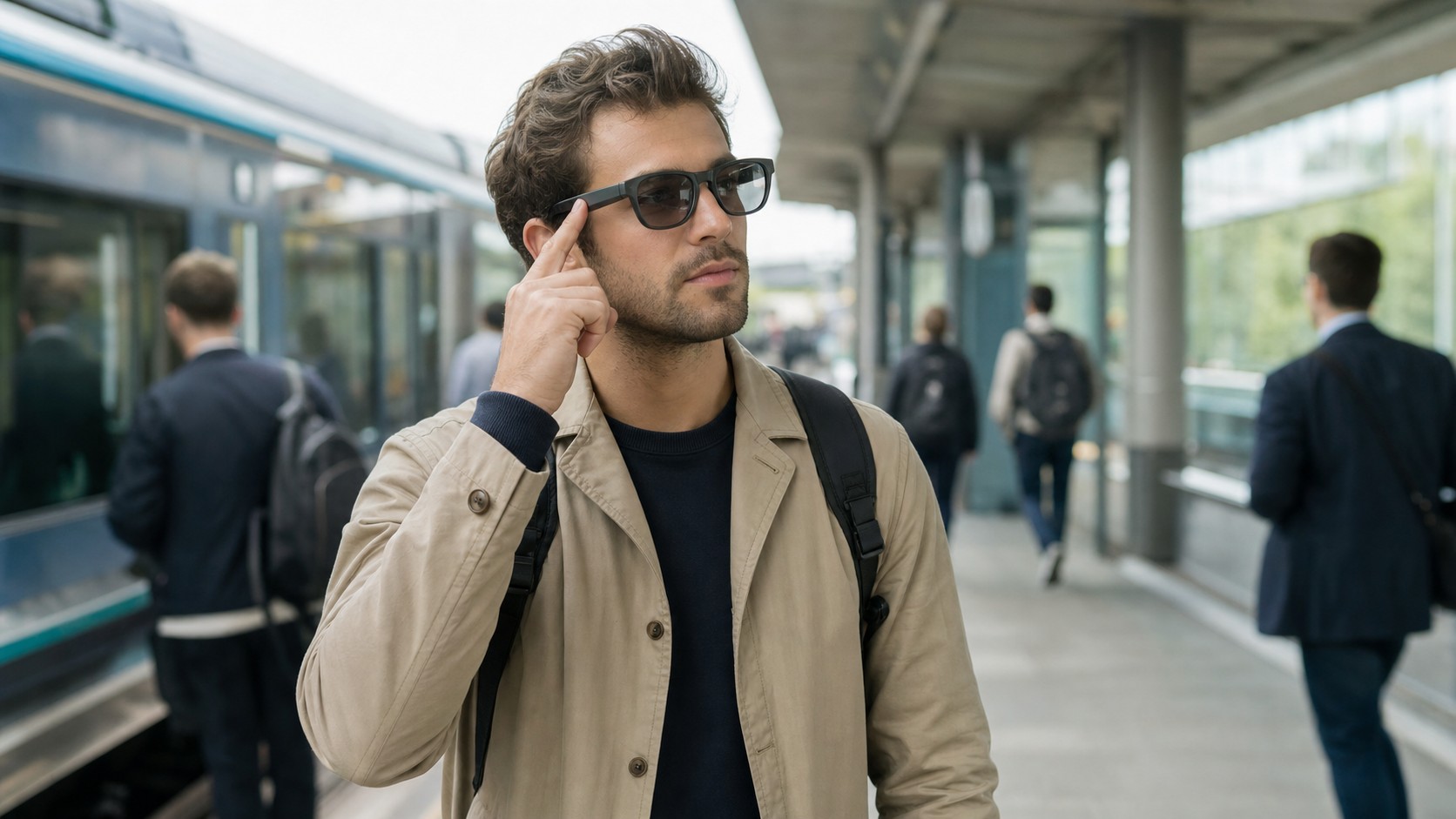
Think about travel. A phone map is powerful, but it pulls your eyes downward. Glasses can guide you while you keep moving. A translation app works well, but glasses can make foreign text feel less like a separate chore. A camera app has more controls, but glasses capture the moment before it disappears.
That trade-off explains why the smartphone may lose attention before it loses ownership. People may still carry a phone, yet interact with it less often. The winning smart glasses do not have to replace every app; they only have to replace the habits that happen fifty times a day.
The Biggest Barrier Is Trust
For smart glasses to become mainstream, they have to feel socially acceptable. That means normal-looking frames, clear camera indicators, reliable privacy controls, and a design that does not make other people wonder whether they are being recorded. Consumers are already sensitive about phones in public; a face-worn camera raises the stakes.
Trust also includes data handling. Glasses may process voice, images, location, contacts, and personal routines. Shoppers will want to know what happens on-device, what goes to the cloud, how recordings are stored, and whether advanced features require subscriptions. A clever assistant loses appeal quickly if people feel watched, upsold, or trapped.
Comfort is part of trust too. Nobody wants to babysit a device sitting on their face. The frames need to be light, durable, attractive, and compatible with prescription lenses. Battery life has to survive normal use, and charging needs to fit routines people already have.
Smartphones Will Become the Backup Screen
The most realistic future is not glasses replacing phones in one dramatic switch. It is a division of labor. Glasses handle quick awareness, capture, voice, navigation, and AI help. Phones remain the private slab for deep reading, detailed controls, banking, shopping, games, and anything that benefits from a larger touchscreen.
That sounds modest, but it would still be a major change. If glasses take over notifications, casual photos, directions, short replies, calls, and quick searches, the phone becomes less central to your attention. You may still own it, but you may stop reaching for it by default.
The Phone Habits That Move First
The first habits to move from phone to glasses are the ones that feel annoying precisely because they are small. A buzzing message, a quick weather check, a reminder to buy coffee, or a two-sentence reply does not really deserve the full phone ritual. You unlock the screen, see three other alerts, swipe through an app, and suddenly a ten-second task has become a minute of distraction. Smart glasses can compress those moments into a voice prompt, a spoken answer, or a tiny visual cue.
Photography is another obvious shift. Phones made everyone a photographer, but they still interrupt the scene. You have to notice the moment, reach for the device, frame it, and decide whether the action is worth pausing. Glasses can capture from eye level while your hands stay free, which is useful for parents, travelers, cyclists, cooks, creators, and anyone trying to record a first-person activity. The phone will still win for careful composition, zoom, portraits, and editing. Glasses win when the moment is moving too quickly for the pocket.
Navigation may be the habit that makes the biggest emotional difference. Walking through a new city with a phone in your hand works, but it also advertises distraction and keeps your eyes off the street. Driving directions already moved from map apps to dashboard screens and voice prompts; walking directions are likely to make a similar move to eyewear. Even simple cues such as turn alerts, transit reminders, gate numbers, and arrival updates can make glasses feel less like a gadget and more like a personal guide.
Search is changing too. On a phone, search usually starts with typing and ends with scanning links. On glasses, the better version starts with context. You can ask what kind of plant is in front of you, whether a jacket color matches another item, what a sign says, how to fix the part you are holding, or whether the restaurant across the street has vegetarian options. That kind of situational answer does not need a full browser window. It needs the device to understand what you mean in the moment.
Communication will move unevenly, but it will move. Long messages, group chats, and anything emotionally delicate still deserve a screen. Quick calls, voice replies, calendar nudges, and low-stakes updates are better candidates for glasses. The strongest consumer pitch is not that smart glasses make you more available. It is that they can make availability less disruptive, letting you stay present while still catching the small pieces of digital life that actually need attention.
What Still Has to Improve
Battery life is the first practical ceiling. A phone can be thick, flat, and packed with cells; glasses have to sit comfortably on ears and a nose. That means companies have to balance camera use, displays, AI processing, microphones, speakers, heat, and frame weight in a much smaller design. Until that balance improves, consumers will need to think about smart glasses as a high-convenience companion, not a device that can absorb every phone task from morning to midnight.
Controls also need to feel natural. Voice is powerful, but nobody wants to talk to their glasses in every elevator, store aisle, or quiet office. Touchpads, rings, watches, wristbands, subtle gestures, and eye-based selection may all play a role. The winning system will be the one that lets people act quickly without feeling theatrical. Smartphones trained users around taps and swipes; glasses need their own language that feels polite in public.
App ecosystems are the slower challenge. A smartphone is not just hardware; it is a universe of banking apps, loyalty cards, rideshare tools, smart-home controls, photo libraries, work chats, and entertainment platforms. Smart glasses do not need to copy every one of those apps, but they do need clean bridges to the services people already trust. The more often a user has to pull out the phone to finish the task, the less the glasses feel like a replacement.
Visual quality matters, especially for display glasses. Text has to be readable outdoors, bright enough without draining the battery, and positioned so it does not block the real world. Too much information becomes annoying fast. The best interface may be surprisingly restrained: a name, an arrow, a line of text, a translation, a timer, or a small confirmation that the task worked. Replacing phone habits does not require filling your view with widgets. It requires showing the right bit of information at exactly the right time.
Why the Timeline Feels Shorter Now
Several pieces are arriving at the same time. AI assistants are more conversational. Tiny cameras and microphones are better. Eyewear partnerships make frames look less experimental. Display technology is improving, even if it is still expensive. Consumers are also more aware of screen fatigue, which gives smart glasses an emotional opening that earlier wearables lacked.
Competition will speed that up. When major platforms, eyewear brands, chipmakers, and app ecosystems chase the same category, progress tends to move from impressive demos to everyday products quickly. The first mainstream winners will probably be the glasses that feel least like gadgets: comfortable frames with reliable voice, strong audio, useful AI, and just enough visual information.
Price will decide how fast adoption spreads. A premium pair can excite early adopters, but phone-like scale needs choices across budgets, styles, and prescriptions. Once smart glasses become a normal upgrade path, carriers, insurers, employers, and retailers could help push them into the same consumer rhythm that made smartphones unavoidable.
What to Watch Before You Upgrade
If you are comparing smart glasses with your smartphone today, focus on your actual habits. If you mainly want fewer screen checks, better hands-free photos, easier calls, and quick AI help, current models may already be useful. If you expect full app replacement, immersive displays, all-day battery, and perfect privacy controls, waiting makes sense.
The near future belongs to hybrid users. They will keep a phone in their pocket but let glasses handle the moments where reaching for that phone feels slow, rude, unsafe, or distracting. That is how replacement often begins in consumer tech: not with one device vanishing, but with another device quietly taking over the best parts of its day.