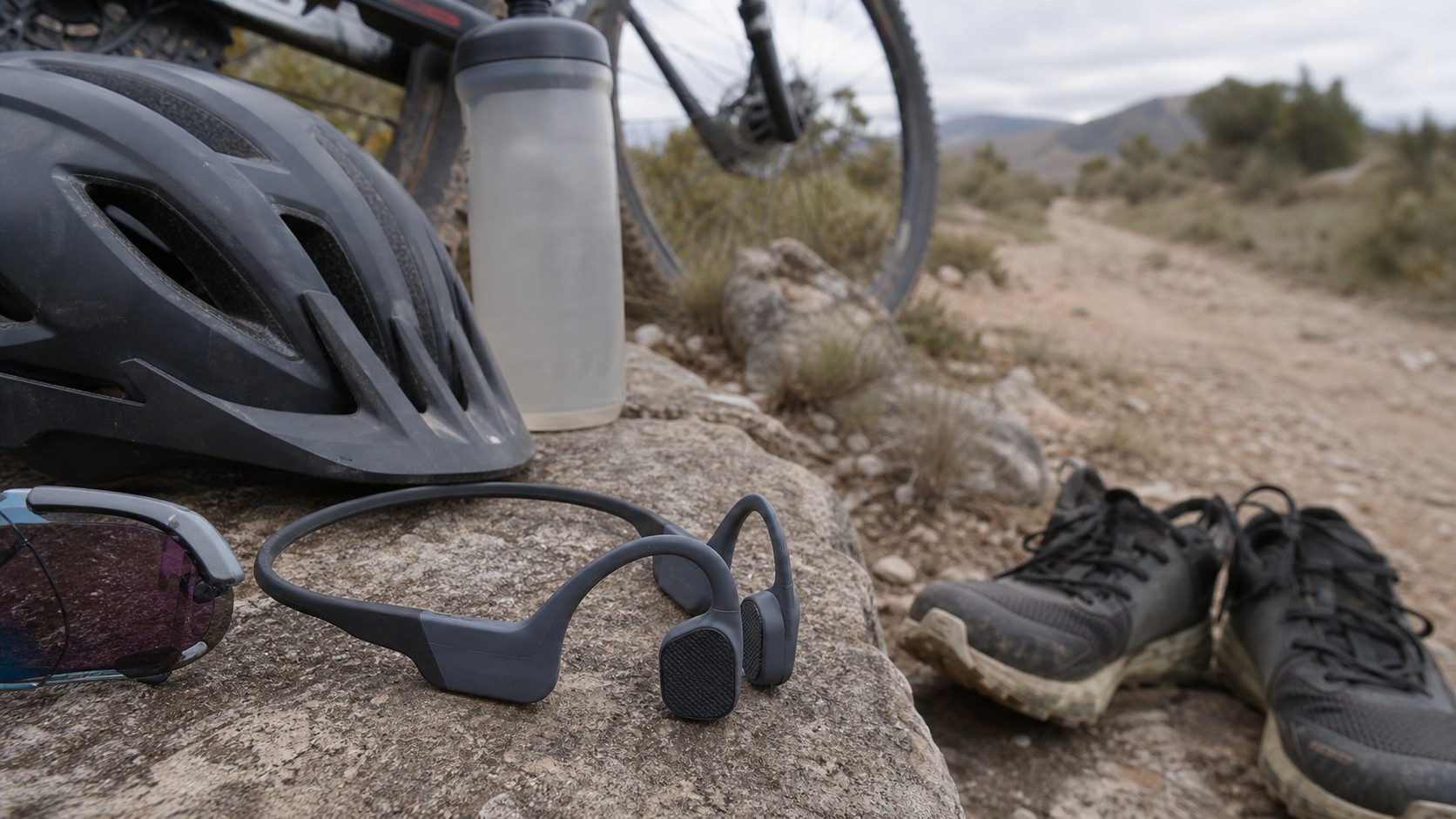
Bone Conduction Headphones Are Built for Athletes Who Need to Hear the World
The best bone conduction headphones for athletes are not simply open-ear earbuds with a sport strap. They work differently, feel different during hard efforts, and solve a different problem. Instead of placing a speaker at the ear canal, they rest small vibrating transducers against the cheekbones and send sound through bone vibration toward the inner ear. That leaves the ears uncovered, which is why runners, cyclists, hikers, rowers, and gym users keep coming back to them when situational awareness matters. You can hear a coach, a bike bell, traffic movement, wind shifts, trail users, and race volunteers while still getting music, podcasts, interval cues, or navigation prompts. The tradeoff is that bone conduction rarely delivers the bass weight, isolation, or fine detail of sealed earbuds. For athletes, though, the win is not studio sound. The win is a steady, sweat-resistant, helmet-friendly audio layer that stays out of the ear, survives long sessions, works with sunglasses, and keeps the outside world available when attention is part of the workout.
A: They can support better awareness because they leave the ear canal open, but safety still depends on volume, route choice, and attention.
A: Most sport models do, though the best fit depends on helmet straps, sunglass arms, and how the rear band sits under the retention dial.
A: Only waterproof models designed for swimming should be used in the pool, and they usually need onboard audio storage because Bluetooth does not work well underwater.
A: No. Bass is usually lighter and less physical than sealed earbuds, even on premium models.
A: They are better when you want vibration-based audio, a secure wraparound frame, and fully uncovered ears, but open-ear earbuds may sound fuller.
A: At moderate outdoor volume, leakage is usually low, but quiet rooms and high volume can make audio audible to people close by.
A: They work for quick calls, though wind, traffic, and heavy breathing can reduce microphone clarity during workouts.
A: Look for eight hours or more if you do long runs, fondos, hikes, or race days with travel time before and after the event.
A: Any audio device can contribute to hearing strain at high volume, so keep levels moderate and avoid trying to overpower loud traffic.
A: Higher volume increases the transducer movement against the cheekbone, which can feel buzzy or ticklish on some faces.
How to Choose the Right Pair for Your Training
Start with the sport you do most, then think about the moments when normal earbuds fail you. Runners usually want low weight, low bounce, easy controls, and enough awareness to hear vehicles approaching from behind. Cyclists care about helmet compatibility, wind noise, glasses clearance, and prompts from a phone or cycling computer. Triathletes need water resistance, quick handling, and a frame that does not become annoying when stacked with a cap, visor, sunglasses, and race nerves. Hikers and walkers may care less about speed but more about all-day comfort, battery life, and the ability to keep conversations natural.
The central promise is openness. Bone conduction headphones leave the ear uncovered because the drivers do not sit in or over the ear canal. That is different from open-ear earbuds, which place tiny speakers near the ear and aim sound through the air. Open-ear earbuds can sound fuller, especially with bass and vocals, but they still rely on directional speaker output. Bone conduction uses vibration through contact points near the cheekbones. That contact is why fit, pressure, and placement matter so much. If the pads sit too far forward, too low, or under a helmet strap, audio can feel weak or irritating.
For endurance athletes, the best pair is the one you forget about for most of the session. A few grams of extra weight can feel minor in a store and obvious after a two-hour run. A slightly stiff band can be fine on a commute and distracting under a cycling helmet. Before buying, picture the full gear stack: hat, sunglasses, helmet, buff, headlamp, hydration vest, winter layers, and watch controls. Bone conduction models are often excellent with this kind of gear, but small differences in frame shape determine whether they disappear or keep asking for attention.
Best Overall Pick: Lightweight Sport Bone Conduction
The safest overall choice for most athletes is a lightweight, IP67-rated bone conduction headset with an eight-to-ten-hour battery, reliable Bluetooth, and raised physical buttons. That combination covers everyday runs, rainy rides, long walks, and gym sessions without making the product too specialized. It should stay stable while sprinting without creating cheekbone fatigue during long efforts.
Sound should be judged by athletic usefulness rather than hi-fi drama. Good bone conduction audio makes vocals clear, keeps rhythm tracks recognizable, and lets workout cues cut through at moderate volume. It should not require you to turn the volume up so high that road sound disappears. If you mostly listen to podcasts, audiobooks, guided workouts, or playlists that provide tempo rather than deep immersion, a well-tuned sport model will feel natural within a few sessions.
Controls deserve more attention than spec sheets usually give them. Tiny touch panels can be frustrating when your fingers are cold, sweaty, or gloved. A physical multifunction button and separate volume controls are easier to manage while moving. The best models also give clear voice confirmations when they power on, connect, change battery state, or switch pairing mode, so you are not staring at your phone at a trailhead.
Best for Runners
Runners should prioritize bounce control, low weight, and awareness at neighborhood speeds. The frame should sit snugly without shifting during strides, downhill braking, or fast cornering. If the rear band taps a collar, winter jacket, or hydration pack, it can become distracting, so test the headset with the clothing you actually train in. A good running pair should also stay comfortable under a cap or headband without pushing the transducers away from the cheekbones.
Road runners get the most obvious benefit. You can keep cadence music or pace cues running while hearing engines, cyclists, dogs, and conversations. Trail runners benefit too, especially on shared paths where hearing other users matters. The limitation comes on loud roads. Bone conduction cannot overcome heavy traffic noise without high volume, which reduces the awareness that makes the category useful. Near fast traffic, treat audio as a background layer.
Best for Cyclists
Cyclists need to be more demanding about helmet and eyewear fit. The transducers should sit cleanly in front of the ear, the arms should not fight sunglass temples, and the rear band should clear the helmet retention system. Try turning your head as if checking traffic over both shoulders. If the frame shifts, taps the helmet, or moves under the strap, it may become annoying on longer rides.
Wind noise is the big challenge. At running speed, podcasts can be easy to follow. At road cycling speed, moving air can swallow spoken words, especially on descents or exposed sections. Music with a steady beat usually survives better than dialogue. Navigation prompts are often the best cycling use case because they are brief and do not need perfect fidelity. For group rides, keep volume low enough that you can hear calls, freehub noise, braking, and rider movement around you.
Battery life also matters differently on the bike. A weekday run may last 45 minutes, while a weekend ride can stretch for hours. Choose a pair with margin after your longest ride, not merely enough for an average workout.
Best for Triathlon and Water-Heavy Training
Triathletes should divide the decision into two categories: sweat and rain resistance for normal training, and true swim support for pool or open-water use. Many sport bone conduction headphones can handle sweat and rain, but that does not make them swim-ready. Look for a specific waterproof rating and manufacturer support for swimming before taking any headset into the pool. Chlorine, salt, and repeated immersion are harder on gear than a sweaty long run.
Bluetooth is another practical limit. It does not travel well through water, so swim-focused models usually rely on onboard audio storage. That means loading files before practice and giving up live streaming during the swim. For some athletes, a stored playlist is perfect. For others, it is an extra routine they will not maintain.
For race-day triathlon use, check the event rules and your own safety plan. Some races restrict headphones, and open-water awareness is serious business. Bone conduction can be useful in training, but it should never replace attention to swimmers, boats, officials, weather, and course instructions.
Comfort, Fit, and the Helmet Stack
The most common buying mistake is treating all wraparound frames as interchangeable. Head shape changes everything. A narrow head may need a smaller-size frame so the transducers land firmly. A larger head may feel pressure at the temples or cheekbones from a model that reviewers call lightweight. Early comfort can fade if the pads press too sharply.
Sunglasses add another layer. Thin running sunglasses usually cooperate, while thick lifestyle frames can crowd the headset arms. Cycling glasses with wide temples may create pressure under helmet straps. The order can matter: some athletes prefer glasses first and headphones over them, while others reverse the stack. There is no universal rule, only the setup that stays quiet, secure, and comfortable for your face.
Helmets make fit more consequential. A headset that feels perfect on a run may collide with a bike helmet retention dial or sit awkwardly under straps. Before a long ride, put on the full kit, tighten the helmet properly, and move through normal positions: upright, drops, aero bars, climbing, and shoulder checks. If the band shifts or the pads lose contact, choose another size or shape.
Water Resistance and Durability
For athletes, water resistance is not a luxury feature. Sweat is salty, rain is unpredictable, and many people rinse their gear after hard sessions. An IP55 rating can be enough for light sweat and dust, but IP67 gives more confidence for heavy sweating and wet weather. Swim models need stronger protection and explicit immersion support. Do not assume that a higher-looking number means the same thing across every product; read the rating and the use guidance together.
Durability also includes charging design. Magnetic chargers are convenient, but wet contacts can corrode or fail if the headset is tossed into a bag immediately after a workout. Dry the charging area before connecting power. If the model uses a proprietary cable, keep track of it before travel or races. USB-C is easier to replace, but not every water-resistant design uses it.
Audio Quality: Set the Right Expectations
Bone conduction sound has improved, but the category still has natural limits. Bass is lighter because the headset is not sealing the ear canal and moving air inside a closed space. Detail can be masked by wind and traffic. At high volume, vibration can feel buzzy against the cheekbones. If your ideal workout sound is deep electronic bass, immersive rock, or quiet acoustic detail, sealed sport earbuds will sound better.
That does not make bone conduction poor. It makes it specialized. Voice clarity, steady rhythm, spoken coaching, interval alerts, and background playlists are exactly where the format works. The outside world stays in the mix, which can make long sessions feel less isolated and safer on shared routes.
Some models include EQ modes. A vocal mode can help podcasts, while a brighter mode can make music easier to follow outdoors. Be cautious with bass boost. It may increase vibration more than musical impact, and it can shorten battery life. The best tuning is usually the one that remains intelligible at modest volume.
Battery Life and Controls
Battery estimates are usually measured under controlled conditions, so real training can vary with volume, temperature, calls, and connection stability. For daily runners, six to eight hours may be plenty. For ultrarunners, hikers, charity walkers, and cyclists, eight to twelve hours is a more comfortable target. If you use a sports watch as the source, test that pairing before relying on it for a race or long route.
Fast charging is valuable because athletic gear lives in bags, cars, lockers, and laundry-adjacent piles. A ten-minute charge that rescues a morning workout can matter more than a slightly larger battery. Controls should be equally practical. You want to pause at a crossing, lower volume near traffic, skip a track, answer a call, or replay a prompt without breaking stride.
What to Avoid
Avoid any model that markets itself as open-ear without making the technology clear. Some open-ear earbuds hover speakers near the ear and may be excellent products, but they are not bone conduction if they do not use contact vibration. Avoid vague waterproof claims that say sweatproof without a rating. Avoid frames that feel almost comfortable, because almost comfortable becomes very noticeable after mileage.
- Do not buy for bass if awareness is the real goal.
- Do not race in a new headset before training with it.
- Do not overpower traffic noise with higher volume.
Also avoid choosing purely by price. The cheapest pair may work for walking, but athletes put more stress on hinges, coatings, batteries, buttons, and contact pads. A reliable midrange model often costs less over time than replacing a bargain headset after a wet training block.
Final Recommendation
The best bone conduction headphones for athletes are the pair that matches your training environment more than your music taste. If you run or ride near traffic, prioritize awareness, fit, water resistance, and easy controls. If you train in wet conditions, pay close attention to the IP rating and whether the model is truly swim-capable. If you wear helmets or sunglasses, test the full setup before trusting it on a long day.
Choose bone conduction because you want vibration-based open-ear audio that cooperates with endurance sports, not because you expect sealed-earbud sound without ear tips. When expectations are right, the category makes a lot of sense. It gives athletes a practical way to hear pacing cues, music, and navigation while staying connected to roads, trails, teammates, and changing conditions. That balance is the reason bone conduction remains one of the most useful audio wearable choices for serious outdoor training.