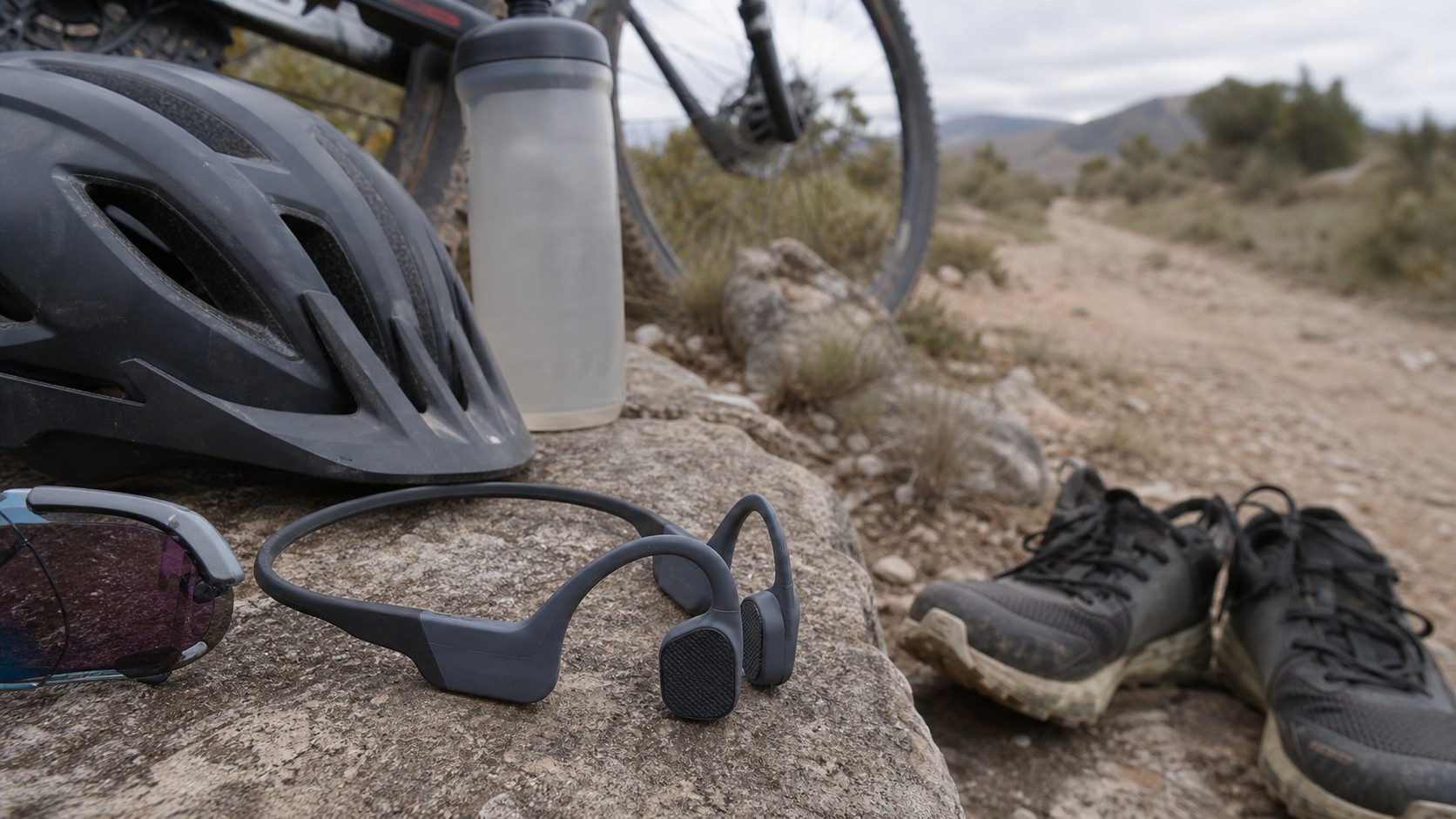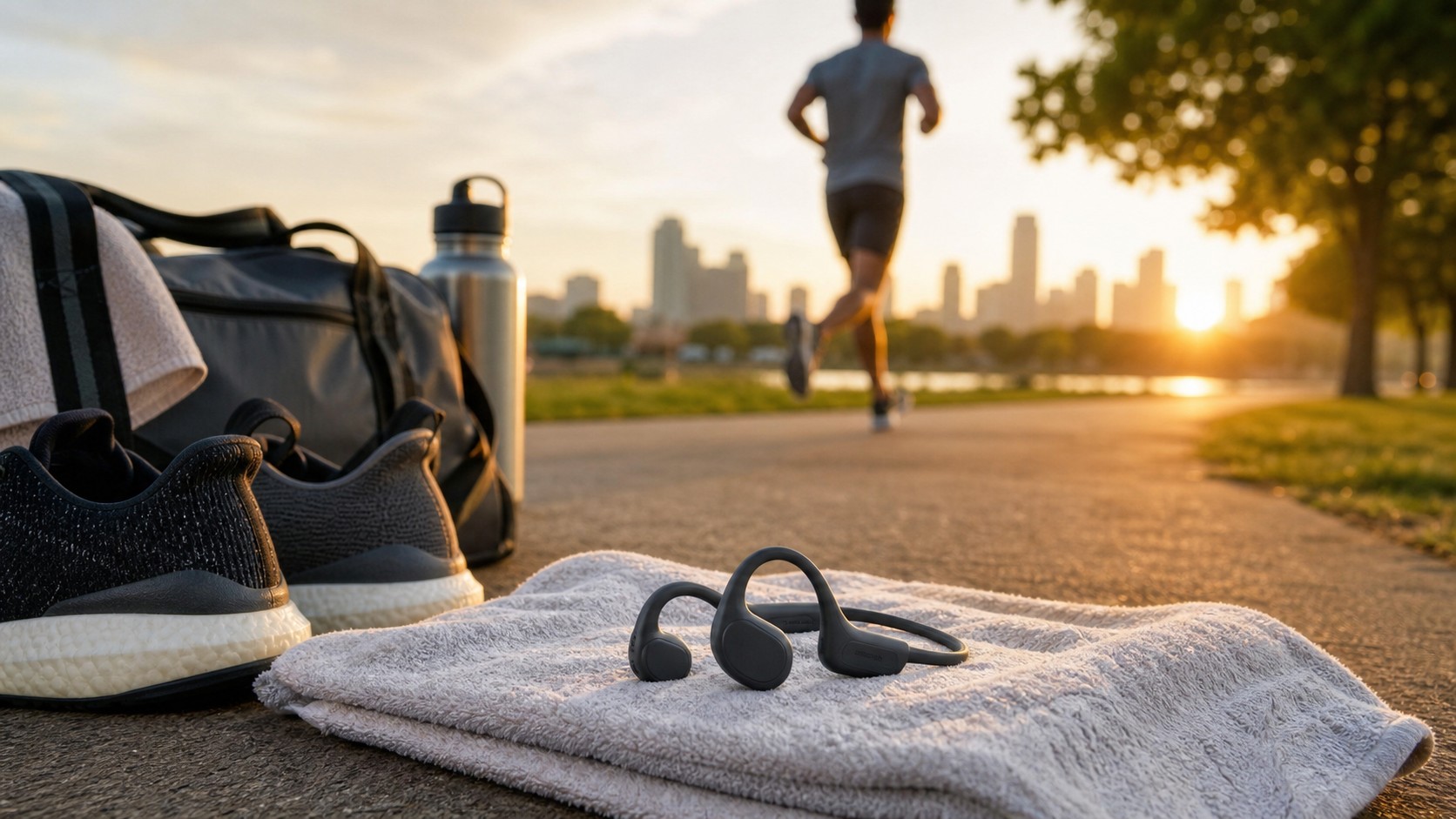
Open-ear earbuds are training gear, not just audio gear
The best open-ear earbuds for running and workouts solve a different problem from sealed wireless earbuds. They let music, coaching, calls, and split alerts sit beside traffic, trail users, gym announcements, and your own breathing instead of replacing those sounds. That makes them especially useful for runners who train on roads, cyclists who need awareness, walkers who share paths, and lifters who dislike the plugged-up feeling of silicone tips. The tradeoff is that open-ear designs rarely deliver the same bass isolation or private listening as in-ear buds, so the right pick depends on fit security, sweat resistance, wind control, button layout, battery stamina, and how well the sound holds together once your pace rises. A great running pair should disappear on easy miles, stay planted during hill repeats, survive salty summer sessions, and let you adjust volume without breaking stride. In the gym, it should avoid clamping under hats or glasses, keep controls reachable during sets, and handle coaching cues without blasting everyone nearby. Think less about the loudest spec sheet and more about whether the design matches your training environment.
A: They can improve awareness compared with sealed earbuds, but you still need moderate volume, route judgment, and attention at crossings.
A: They work best for coaching, podcasts, and moderate music; heavy gym speakers can overpower their lighter bass.
A: Bone conduction can feel steadier under motion, while air conduction often sounds fuller; comfort and fit usually decide the better choice.
A: IPX5 is a sensible baseline, while IPX7 gives more peace of mind for rain, heavy sweat, and rinsing.
A: Yes, if the frame, hook, or clip matches your ear shape and does not shift when your jaw and shoulders move.
A: Most open-ear models leak some audio at high volume, so shared offices and quiet gyms call for lower levels.
A: They are useful for pacing prompts and crowd awareness, but always check the event rules before race day.
A: Music usually remains usable, but calls and podcasts can suffer unless the microphones and app processing reduce wind noise.
A: Many pairs work with glasses, though thick earhooks may crowd sunglasses or helmet straps during longer sessions.
A: They are comfortable for lifting and circuits, especially when you want to hear timers, coaches, or people nearby.
How to choose open-ear earbuds for running and workouts
Start with the shape, because fit decides whether every other feature gets a fair chance. Open-ear earbuds usually come in three broad styles: bone conduction bands that sit in front of the ear, air conduction hooks that aim small speakers toward the ear canal, and clip-style buds that pinch gently around the outer ear. Bands are popular for road running because they feel predictable and leave the ear completely uncovered. Hooks can sound richer, especially for music, but they may crowd glasses. Clips are discreet and gym-friendly, yet they need careful testing during sweat and quick head movement.
For running, a secure design should stay stable without asking you to tighten your face, adjust your hat, or press the buds after every mile. Try a bounce test before trusting a pair for intervals: jog in place, shake your head lightly, turn quickly, and mimic reaching for a bottle. If the speakers drift away from the ideal angle, sound drops fast. That is not a small annoyance during workouts because you will raise volume to compensate, which can reduce awareness and battery life.
Sweat resistance should be treated as a requirement rather than a nice extra. IPX4 can survive basic splashes, but frequent runners should look for IPX5 or higher, especially in hot climates or on treadmill days where sweat falls straight onto the hardware. IPX7 is better for rain and rinsing, although it does not automatically mean the charging case is water resistant. After salty sessions, wipe the contact points and let the earbuds dry before sealing them in the case. That tiny habit prevents many charging failures.
Comfort should be judged late in the run, not during the first minute after unboxing. A frame that feels barely noticeable at home can rub once sweat softens the skin or once sunglasses settle behind the ear. If you train in caps, beanies, or helmets, test the whole setup together. Small pressure points become big distractions during repeat workouts, and the best open-ear earbuds are the ones you stop adjusting.
Sound quality without losing awareness
Open-ear sound is about balance. You want enough clarity for rhythm, coaching, and podcasts, but not so much volume that the world disappears. Air conduction designs usually produce more familiar sound because they move air toward the ear canal. Bone conduction designs send vibration through the cheekbone area and can feel leaner, especially in bass. Neither approach is automatically best. The right one depends on whether you value musical fullness, stability, helmet compatibility, or all-day comfort.
Runners should listen for vocal clarity at moderate volume. If a coaching app, audiobook, or pace alert sounds thin indoors, it may become hard to follow near traffic or wind. Music lovers should check whether drums have enough impact without maxing the volume. Some apps include EQ presets that lift bass or sharpen speech. Use them, but avoid tuning that makes every outdoor run louder. Awareness is the point of this category.
Sound leakage also matters. Open-ear earbuds send sound outward by design, and loud playlists can be audible to people beside you. On a solo road run, that may not matter. In a quiet weight room, office gym, or packed treadmill row, it can become rude quickly. If your workouts happen around others, choose a pair known for directional speakers and keep volume below the point where cymbals and vocals spill into the room.
Do not judge the sound only with a favorite song. Try a podcast, a guided workout, a metronome-style cadence track, and the alert tone from your fitness app. Training audio has different priorities than casual listening. A pair with exciting bass but muddy speech may be fun on a commute and frustrating during intervals when the next cue needs to land instantly.
Safety, wind, and outdoor training
The main advantage of open-ear earbuds is situational awareness, but awareness is not automatic. A runner blasting music through open speakers can still miss a turning car, cyclist bell, or trail warning. Use volume as a training setting: lower it near intersections, through parking lots, and on narrow paths. Some runners reserve podcasts for quiet routes and use beat-driven music only where sightlines are good. That small decision makes the technology more useful.
Wind is the outdoor weakness that specs often hide. A pair can sound excellent at walking pace and become messy during tempo work on an exposed road. Speaker placement matters because wind can pass between the driver and ear. Microphones face a similar problem on calls. If you take calls while walking after a workout, look for models with wind reduction and test them outside, not just in a kitchen. For serious training, assume calls are secondary and judge the earbuds by how well music and prompts survive motion.
Outdoor controls should be boring in the best way. Physical buttons are usually easier to trust when hands are wet or cold. Touch panels look sleek but can react to sweat, hair, headbands, and accidental brushes. The best setup lets you change volume, pause audio, and answer calls without pushing the device out of place. If you use a running watch, decide whether controls will live on the watch, the earbuds, or both. Splitting controls across devices can be convenient, but it can also slow you down when a car approaches or a coach starts talking.
Route type should influence your purchase. City runners need quick volume changes and traffic awareness. Trail runners often care more about stability over uneven ground and hearing riders or other runners approaching from behind. Track workouts reward strong button feedback because repeats leave little time for menu hunting. The same pair can cover all three, but knowing your dominant environment helps you avoid paying for features you will rarely use.
Gym use is a different test
In the gym, open-ear earbuds compete with loud music, metal plates, fans, and machines. That environment rewards clear mids and easy controls more than maximum awareness. You may want to hear a trainer, timer, or partner while still keeping your own playlist moving. For strength sessions, hooks and clips often feel less intrusive than sealed tips because they avoid pressure during bracing, jaw movement, and heavy breathing.
There are tradeoffs. Open-ear earbuds can be less satisfying for bass-heavy lifting playlists, and high volume may leak to nearby lifters. They can also shift during floor work if a band touches a bench or mat. Before making a pair your main gym audio, test pushups, situps, presses, and stretches. A model that feels perfect upright may become awkward when your head rests against equipment.
For classes, open-ear designs are excellent. You can hear cues without pulling a bud out, and you can keep music or heart-rate coaching at a background level. For treadmill workouts, they reduce the sealed-ear thump that some runners notice with in-ear buds. The downside is treadmill noise. If the belt, fans, and room speakers are loud, you may need a pair with stronger output or you may prefer semi-open sport earbuds for indoor days.
Shared spaces add etiquette to the buying decision. A quiet Pilates studio, apartment gym, or physical therapy room will expose sound leakage more than an open weight floor. If you often train close to others, choose a design that aims audio tightly and sounds clear at lower levels. Stronger privacy can matter as much as stronger bass.
Battery life, coaching, and device switching
Battery needs depend on your training week. A casual gym user can live with six hours per charge. A marathoner, ultrarunner, or all-day hiker should look for eight to ten hours, plus a case that provides several full recharges. Published runtime usually assumes moderate volume. Outdoor wind, maximum volume, calls, cold weather, and multipoint pairing can reduce it. Quick charging is valuable because workout gear is easy to forget until five minutes before leaving.
Coaching support can be more important than raw sound quality. If you use guided runs, heart-rate prompts, interval timers, or navigation, make sure spoken audio remains clear without sudden volume spikes. Some earbuds handle voice prompts gracefully while others duck music too aggressively or clip the first word of an alert. Pair them with the watch or phone you actually train with and test a short interval workout before trusting them for a long run.
Multipoint Bluetooth is useful for people who move from desk to gym to commute, but it is not always essential for athletes. A simpler connection to a watch may be more reliable on race day. Low latency is helpful for video workouts, rowing sessions, and treadmill classes where a coach demonstrates movement on screen. For outdoor running, connection stability matters more. Dropouts are more annoying than modest audio delay.
Case design deserves a closer look than it usually gets. A bulky case may be fine in a gym bag but annoying in a race belt or running vest. A slippery case is easy to drop after a sweaty session. Magnetic seating should feel decisive, because poorly seated earbuds can spend all night in the case without charging and quietly ruin a morning workout.
Who should buy them, and who should not
Open-ear earbuds are ideal for runners who want music without shutting out the route, walkers who spend hours outside, gym users who dislike ear tips, and athletes who rely on coaching prompts. They are also strong secondary earbuds for people who already own noise-canceling buds. Use sealed earbuds for flights, commuting, and deep focus; use open-ear models for movement and awareness. That split often works better than expecting one pair to do everything.
Skip them if your main priority is heavy bass, quiet-office privacy, or blocking gym speakers. They are also not the best choice if you run only on treadmills beside loud fans and never need environmental sound. In those cases, a secure sealed sport earbud may make more sense. The open-ear category shines when the outside world remains part of the workout.
The smartest buying move is to match the design to your messiest session, not your easiest one. If your hardest test is a sweaty summer long run with sunglasses, choose a stable hook or band with strong water resistance. If your hardest test is a lunch-hour gym session with calls before and after, prioritize microphone quality, leakage control, and a pocketable case. If you split time between trails and treadmills, look for adjustable EQ, buttons, and enough volume headroom for indoor noise.
Price should follow your training volume. Occasional walkers can choose a simple, comfortable pair and be happy. Daily runners should spend more for fit stability, better sweat protection, and dependable controls, because those details get tested several times a week. Premium models are easiest to justify when they replace both workout earbuds and daytime call earbuds.
When everything lines up, open-ear earbuds feel refreshingly practical. They give you enough soundtrack to keep cadence, enough speech clarity to follow coaching, and enough outside sound to stay connected to the route, room, or class. The best pair is not the one with the longest feature list. It is the pair you can wear through sweat, wind, reps, and miles without thinking about it.