Savings Come From Control That Matches The Home
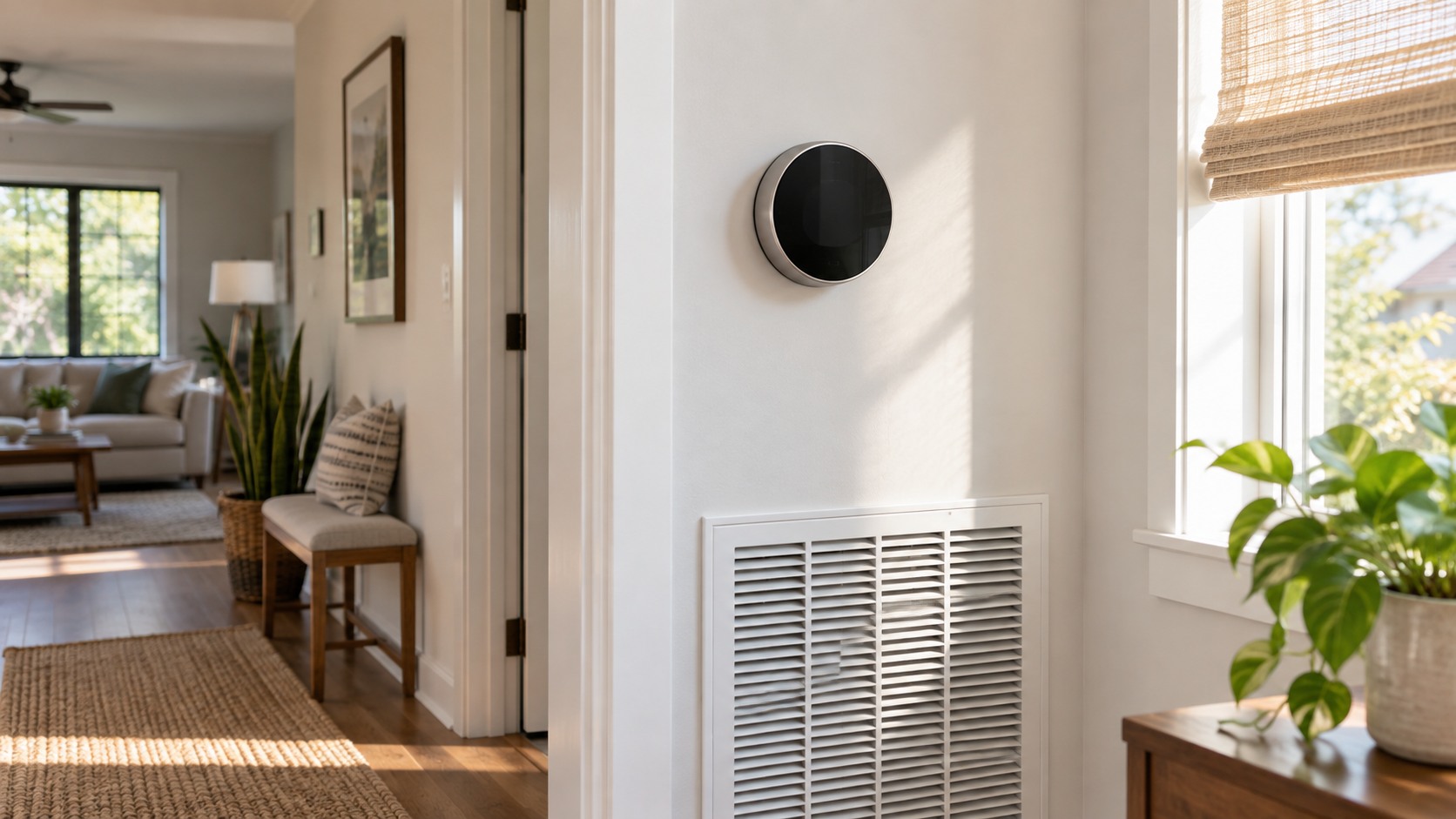
A smart thermostat buying guide should begin with the heating and cooling system, not the glossy screen. The features that actually save money are the ones that reduce wasted runtime without making the house uncomfortable. Scheduling, geofencing, occupancy sensing, remote sensors, equipment reports, rebates, and utility programs can all help, but only when the thermostat is compatible with the HVAC setup and the household lets it do useful work. A good thermostat is less about constant tweaking and more about reliable setbacks, better timing, and clearer energy feedback.
A: A well-matched schedule or occupancy setback usually matters more than a flashy interface.
A: Yes. ENERGY STAR certified smart thermostats are evaluated using real-world field data for savings.
A: They can help comfort, but savings depend on whether sensor rules reduce wasted runtime.
A: It is better for unpredictable routines, while schedules can be stronger for consistent households.
A: Use a pro when wiring, heat pump settings, or accessory equipment is unclear.
A: No. It can reduce waste, but insulation, ducts, windows, and equipment condition still matter.
A: Only if the bill credit and event rules make sense for your comfort needs.
A: Check heating, cooling, fan, auxiliary heat, sensors, app control, and manual override.
A: Look across a full season rather than a few days, because weather changes distort short comparisons.
A: Buying for app features before confirming HVAC compatibility and thermostat location.
Compatibility Comes First
Smart thermostat decisions work best when the room, routine, and people come before the device list. energy-conscious homeowners should begin with the moments that repeat every day, then choose hardware that makes those moments easier to manage. A strong setup feels almost invisible because it supports comfort, timing, safety, and convenience without asking the household to babysit another app.
The most useful features are the ones tied to a clear behavior. Scheduling, sensors, automation, remote control, and energy insights can all help, but only when they match the way the home is actually used. A feature that looks advanced in a demo can become clutter if nobody knows when it should run or how to override it.
Compatibility deserves a practical check before buying. Matter and major smart-home platforms can make basic control easier across ecosystems, but advanced settings still vary by product maker, app, hub, and service plan. Buyers should confirm the exact devices, voice assistants, routines, and household accounts they expect to use instead of relying on broad compatibility claims.
Placement shapes the experience as much as the product itself. A sensor in the wrong corner, a light with the wrong beam angle, or a kitchen appliance placed far from the work zone can make smart features feel unreliable. Testing the location before permanent installation prevents many of the annoyances that make people abandon connected gear.
The subscription and data layer also needs attention. Some devices keep essential features free, while others reserve history, advanced automation, energy reports, or AI assistance for paid plans. The best purchase is the one whose core value still makes sense after trials expire, utility rebates are claimed, and the household settles into normal use.
Savings Depend On Setbacks
Smart thermostat decisions work best when the room, routine, and people come before the device list. energy-conscious homeowners should begin with the moments that repeat every day, then choose hardware that makes those moments easier to manage. A strong setup feels almost invisible because it supports comfort, timing, safety, and convenience without asking the household to babysit another app.
The most useful features are the ones tied to a clear behavior. Scheduling, sensors, automation, remote control, and energy insights can all help, but only when they match the way the home is actually used. A feature that looks advanced in a demo can become clutter if nobody knows when it should run or how to override it.
Compatibility deserves a practical check before buying. Matter and major smart-home platforms can make basic control easier across ecosystems, but advanced settings still vary by product maker, app, hub, and service plan. Buyers should confirm the exact devices, voice assistants, routines, and household accounts they expect to use instead of relying on broad compatibility claims.
Placement shapes the experience as much as the product itself. A sensor in the wrong corner, a light with the wrong beam angle, or a kitchen appliance placed far from the work zone can make smart features feel unreliable. Testing the location before permanent installation prevents many of the annoyances that make people abandon connected gear.
The subscription and data layer also needs attention. Some devices keep essential features free, while others reserve history, advanced automation, energy reports, or AI assistance for paid plans. The best purchase is the one whose core value still makes sense after trials expire, utility rebates are claimed, and the household settles into normal use.
Good setups include fallbacks. Wall switches, manual controls, clear device names, and simple app access matter when guests visit, internet service drops, or someone does not want to use voice commands. A smart home should make ordinary control easier, not remove the familiar controls people still need.
The final test is a week of normal life. Use the setup during busy mornings, quiet evenings, weekends, cleaning, cooking, movie nights, and travel days. If smart thermostat still saves time, reduces waste, improves comfort, or removes friction without constant adjustment, the system is doing the right work.
Sensors Can Improve Comfort
Smart thermostat decisions work best when the room, routine, and people come before the device list. energy-conscious homeowners should begin with the moments that repeat every day, then choose hardware that makes those moments easier to manage. A strong setup feels almost invisible because it supports comfort, timing, safety, and convenience without asking the household to babysit another app.
The most useful features are the ones tied to a clear behavior. Scheduling, sensors, automation, remote control, and energy insights can all help, but only when they match the way the home is actually used. A feature that looks advanced in a demo can become clutter if nobody knows when it should run or how to override it.
Compatibility deserves a practical check before buying. Matter and major smart-home platforms can make basic control easier across ecosystems, but advanced settings still vary by product maker, app, hub, and service plan. Buyers should confirm the exact devices, voice assistants, routines, and household accounts they expect to use instead of relying on broad compatibility claims.
Placement shapes the experience as much as the product itself. A sensor in the wrong corner, a light with the wrong beam angle, or a kitchen appliance placed far from the work zone can make smart features feel unreliable. Testing the location before permanent installation prevents many of the annoyances that make people abandon connected gear.
Energy Reports Need Interpretation
Smart thermostat decisions work best when the room, routine, and people come before the device list. energy-conscious homeowners should begin with the moments that repeat every day, then choose hardware that makes those moments easier to manage. A strong setup feels almost invisible because it supports comfort, timing, safety, and convenience without asking the household to babysit another app.
The most useful features are the ones tied to a clear behavior. Scheduling, sensors, automation, remote control, and energy insights can all help, but only when they match the way the home is actually used. A feature that looks advanced in a demo can become clutter if nobody knows when it should run or how to override it.
Compatibility deserves a practical check before buying. Matter and major smart-home platforms can make basic control easier across ecosystems, but advanced settings still vary by product maker, app, hub, and service plan. Buyers should confirm the exact devices, voice assistants, routines, and household accounts they expect to use instead of relying on broad compatibility claims.
Placement shapes the experience as much as the product itself. A sensor in the wrong corner, a light with the wrong beam angle, or a kitchen appliance placed far from the work zone can make smart features feel unreliable. Testing the location before permanent installation prevents many of the annoyances that make people abandon connected gear.
The subscription and data layer also needs attention. Some devices keep essential features free, while others reserve history, advanced automation, energy reports, or AI assistance for paid plans. The best purchase is the one whose core value still makes sense after trials expire, utility rebates are claimed, and the household settles into normal use.
Rebates And Programs Change The Math
Smart thermostat decisions work best when the room, routine, and people come before the device list. energy-conscious homeowners should begin with the moments that repeat every day, then choose hardware that makes those moments easier to manage. A strong setup feels almost invisible because it supports comfort, timing, safety, and convenience without asking the household to babysit another app.
The most useful features are the ones tied to a clear behavior. Scheduling, sensors, automation, remote control, and energy insights can all help, but only when they match the way the home is actually used. A feature that looks advanced in a demo can become clutter if nobody knows when it should run or how to override it.
Compatibility deserves a practical check before buying. Matter and major smart-home platforms can make basic control easier across ecosystems, but advanced settings still vary by product maker, app, hub, and service plan. Buyers should confirm the exact devices, voice assistants, routines, and household accounts they expect to use instead of relying on broad compatibility claims.
Placement shapes the experience as much as the product itself. A sensor in the wrong corner, a light with the wrong beam angle, or a kitchen appliance placed far from the work zone can make smart features feel unreliable. Testing the location before permanent installation prevents many of the annoyances that make people abandon connected gear.
The subscription and data layer also needs attention. Some devices keep essential features free, while others reserve history, advanced automation, energy reports, or AI assistance for paid plans. The best purchase is the one whose core value still makes sense after trials expire, utility rebates are claimed, and the household settles into normal use.
Good setups include fallbacks. Wall switches, manual controls, clear device names, and simple app access matter when guests visit, internet service drops, or someone does not want to use voice commands. A smart home should make ordinary control easier, not remove the familiar controls people still need.
A Good Thermostat Stays Easy
Smart thermostat decisions work best when the room, routine, and people come before the device list. energy-conscious homeowners should begin with the moments that repeat every day, then choose hardware that makes those moments easier to manage. A strong setup feels almost invisible because it supports comfort, timing, safety, and convenience without asking the household to babysit another app.
The most useful features are the ones tied to a clear behavior. Scheduling, sensors, automation, remote control, and energy insights can all help, but only when they match the way the home is actually used. A feature that looks advanced in a demo can become clutter if nobody knows when it should run or how to override it.
Compatibility deserves a practical check before buying. Matter and major smart-home platforms can make basic control easier across ecosystems, but advanced settings still vary by product maker, app, hub, and service plan. Buyers should confirm the exact devices, voice assistants, routines, and household accounts they expect to use instead of relying on broad compatibility claims.
Placement shapes the experience as much as the product itself. A sensor in the wrong corner, a light with the wrong beam angle, or a kitchen appliance placed far from the work zone can make smart features feel unreliable. Testing the location before permanent installation prevents many of the annoyances that make people abandon connected gear.
The subscription and data layer also needs attention. Some devices keep essential features free, while others reserve history, advanced automation, energy reports, or AI assistance for paid plans. The best purchase is the one whose core value still makes sense after trials expire, utility rebates are claimed, and the household settles into normal use.