Streaming Devices Should Make The TV Feel Faster
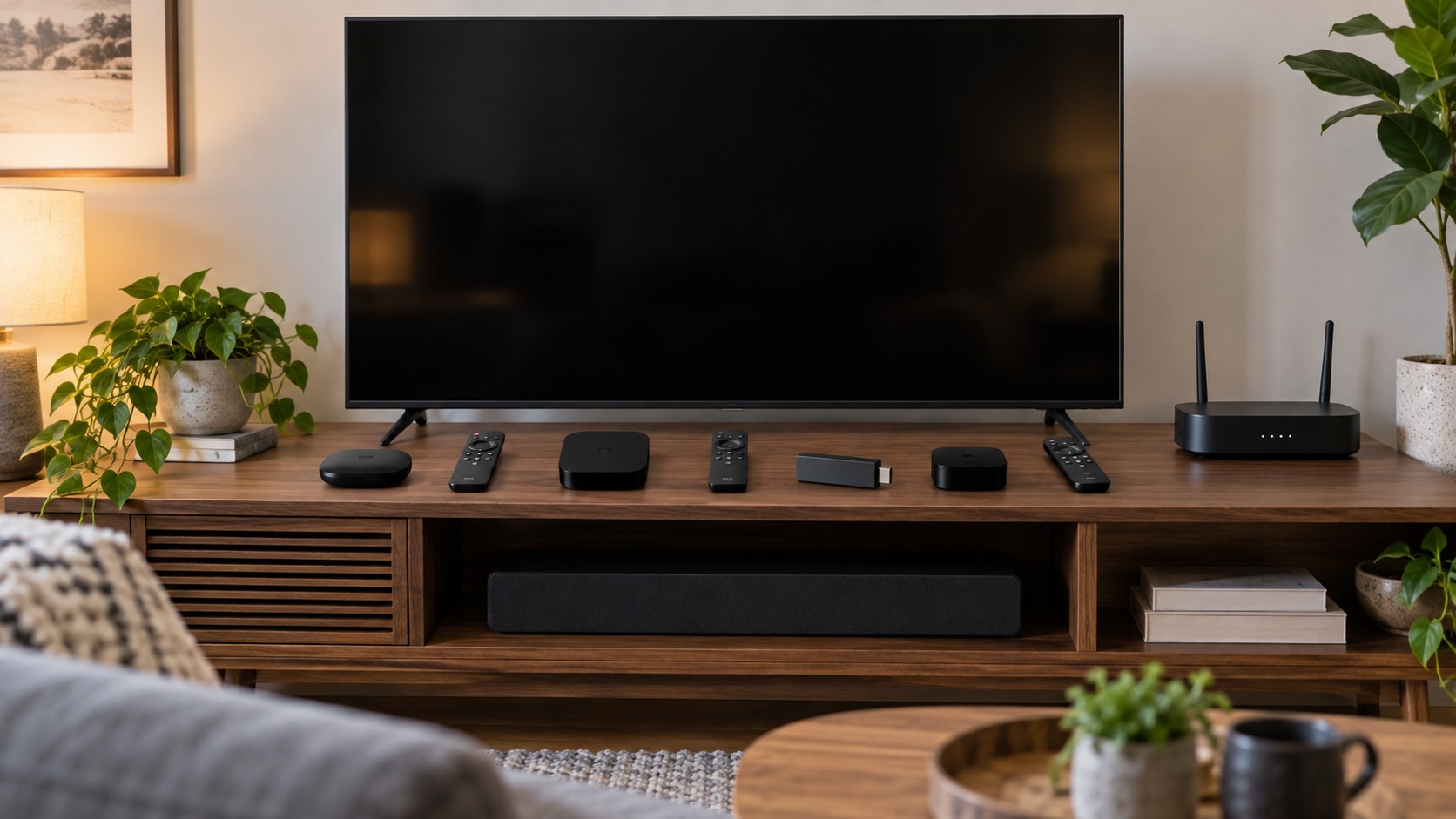
The best streaming devices for every smart home are the ones that make watching easier than the TV's built-in software. A good streamer launches apps quickly, keeps updates coming, supports the services and formats the household uses, and has a remote people can operate without thinking. Smart-home extras can be useful, but the core job is simple: get to the right show, movie, live game, or music app quickly and reliably.
A: A streamer can be faster, updated longer, easier to control, and better supported than built-in TV software.
A: App support, speed, remote quality, network reliability, and format compatibility matter most.
A: Ethernet helps for high-bitrate 4K, crowded Wi-Fi, and rooms far from the router.
A: The best remote controls power, volume, navigation, search, and playback without confusing extra steps.
A: Only if the TV, sound system, and content services can use them.
A: Some can control cameras, lights, or assistants, but entertainment performance should come first.
A: Weak Wi-Fi, overloaded networks, old hardware, app issues, and internet plan limits can all contribute.
A: Yes, profiles and purchase controls keep recommendations and spending cleaner.
A: Compact streamers can travel well when hotel Wi-Fi and login systems cooperate.
A: Replace it when apps slow down, updates stop, formats are missing, or the remote becomes frustrating.
Speed Comes First
Streaming devices choices should begin with the way the household actually spends time. smart TV and streaming households get the most value when features are tied to repeated routines instead of novelty. The right device should reduce steps, improve timing, simplify setup, or make the experience more reliable without forcing every person to learn a complicated app.
The strongest products also fit the room around them. Counter space, cabinet depth, seating distance, cable paths, ventilation, cleaning habits, and shared controls can matter as much as the headline specification. A device that looks powerful online can become frustrating if it is awkward to place, hard to clean, or confusing for guests.
Compatibility should be checked at the exact feature level. A product may support a voice assistant, phone app, or smart-home standard while still reserving advanced actions for its own ecosystem. Buyers should confirm the routines, profiles, remotes, inputs, alerts, and account sharing they expect before treating a device as a long-term anchor.
The best upgrades usually preserve ordinary control. Buttons, remotes, knobs, physical switches, and clear on-device controls still matter when hands are wet, the internet is down, a guest is visiting, or someone simply wants a faster path. Smart features should add flexibility without making the simple action slower.
Long-term cost deserves a sober look. Subscriptions, replacement filters, accessories, mounting hardware, storage plans, cables, and extended warranties can change the real price. A slightly more expensive device can be the better buy when it avoids recurring fees, supports longer updates, or replaces several weaker gadgets.
A good streamer also protects the life of an older TV. When built-in software slows down or loses updates, an external device can refresh the experience without replacing the screen. That makes streaming boxes and sticks especially useful in secondary rooms, guest rooms, and shared spaces where reliability matters more than premium hardware.
Apps And Services Decide Value
Streaming devices choices should begin with the way the household actually spends time. smart TV and streaming households get the most value when features are tied to repeated routines instead of novelty. The right device should reduce steps, improve timing, simplify setup, or make the experience more reliable without forcing every person to learn a complicated app.
The strongest products also fit the room around them. Counter space, cabinet depth, seating distance, cable paths, ventilation, cleaning habits, and shared controls can matter as much as the headline specification. A device that looks powerful online can become frustrating if it is awkward to place, hard to clean, or confusing for guests.
Compatibility should be checked at the exact feature level. A product may support a voice assistant, phone app, or smart-home standard while still reserving advanced actions for its own ecosystem. Buyers should confirm the routines, profiles, remotes, inputs, alerts, and account sharing they expect before treating a device as a long-term anchor.
The best upgrades usually preserve ordinary control. Buttons, remotes, knobs, physical switches, and clear on-device controls still matter when hands are wet, the internet is down, a guest is visiting, or someone simply wants a faster path. Smart features should add flexibility without making the simple action slower.
Long-term cost deserves a sober look. Subscriptions, replacement filters, accessories, mounting hardware, storage plans, cables, and extended warranties can change the real price. A slightly more expensive device can be the better buy when it avoids recurring fees, supports longer updates, or replaces several weaker gadgets.
Setup quality determines whether the device feels smart after the first week. Naming, placement, account access, app permissions, firmware updates, and fallback controls should be finished before the household depends on the feature. A careful first hour can prevent months of small annoyances.
The final test is ordinary use. Try streaming devices during rushed mornings, tired evenings, weekends, guests, cleanup, quiet time, and travel. If it keeps helping when nobody is thinking about the technology anymore, it has earned its place.
Streaming-device value becomes clearer when several people use the same TV. Profiles, simple remotes, parental controls, fast app switching, and reliable search reduce small frustrations every day. A device that performs well for only the most technical person in the house is less useful than one that guests and casual viewers can operate without instructions.
The Remote Shapes Daily Use
Streaming devices choices should begin with the way the household actually spends time. smart TV and streaming households get the most value when features are tied to repeated routines instead of novelty. The right device should reduce steps, improve timing, simplify setup, or make the experience more reliable without forcing every person to learn a complicated app.
The strongest products also fit the room around them. Counter space, cabinet depth, seating distance, cable paths, ventilation, cleaning habits, and shared controls can matter as much as the headline specification. A device that looks powerful online can become frustrating if it is awkward to place, hard to clean, or confusing for guests.
Compatibility should be checked at the exact feature level. A product may support a voice assistant, phone app, or smart-home standard while still reserving advanced actions for its own ecosystem. Buyers should confirm the routines, profiles, remotes, inputs, alerts, and account sharing they expect before treating a device as a long-term anchor.
The best upgrades usually preserve ordinary control. Buttons, remotes, knobs, physical switches, and clear on-device controls still matter when hands are wet, the internet is down, a guest is visiting, or someone simply wants a faster path. Smart features should add flexibility without making the simple action slower.
Network Reliability Matters
Streaming devices choices should begin with the way the household actually spends time. smart TV and streaming households get the most value when features are tied to repeated routines instead of novelty. The right device should reduce steps, improve timing, simplify setup, or make the experience more reliable without forcing every person to learn a complicated app.
The strongest products also fit the room around them. Counter space, cabinet depth, seating distance, cable paths, ventilation, cleaning habits, and shared controls can matter as much as the headline specification. A device that looks powerful online can become frustrating if it is awkward to place, hard to clean, or confusing for guests.
Compatibility should be checked at the exact feature level. A product may support a voice assistant, phone app, or smart-home standard while still reserving advanced actions for its own ecosystem. Buyers should confirm the routines, profiles, remotes, inputs, alerts, and account sharing they expect before treating a device as a long-term anchor.
The best upgrades usually preserve ordinary control. Buttons, remotes, knobs, physical switches, and clear on-device controls still matter when hands are wet, the internet is down, a guest is visiting, or someone simply wants a faster path. Smart features should add flexibility without making the simple action slower.
Long-term cost deserves a sober look. Subscriptions, replacement filters, accessories, mounting hardware, storage plans, cables, and extended warranties can change the real price. A slightly more expensive device can be the better buy when it avoids recurring fees, supports longer updates, or replaces several weaker gadgets.
Formats Should Match The TV
Streaming devices choices should begin with the way the household actually spends time. smart TV and streaming households get the most value when features are tied to repeated routines instead of novelty. The right device should reduce steps, improve timing, simplify setup, or make the experience more reliable without forcing every person to learn a complicated app.
The strongest products also fit the room around them. Counter space, cabinet depth, seating distance, cable paths, ventilation, cleaning habits, and shared controls can matter as much as the headline specification. A device that looks powerful online can become frustrating if it is awkward to place, hard to clean, or confusing for guests.
Compatibility should be checked at the exact feature level. A product may support a voice assistant, phone app, or smart-home standard while still reserving advanced actions for its own ecosystem. Buyers should confirm the routines, profiles, remotes, inputs, alerts, and account sharing they expect before treating a device as a long-term anchor.
The best upgrades usually preserve ordinary control. Buttons, remotes, knobs, physical switches, and clear on-device controls still matter when hands are wet, the internet is down, a guest is visiting, or someone simply wants a faster path. Smart features should add flexibility without making the simple action slower.
Long-term cost deserves a sober look. Subscriptions, replacement filters, accessories, mounting hardware, storage plans, cables, and extended warranties can change the real price. A slightly more expensive device can be the better buy when it avoids recurring fees, supports longer updates, or replaces several weaker gadgets.
Setup quality determines whether the device feels smart after the first week. Naming, placement, account access, app permissions, firmware updates, and fallback controls should be finished before the household depends on the feature. A careful first hour can prevent months of small annoyances.
Privacy Deserves A Pass
Streaming devices choices should begin with the way the household actually spends time. smart TV and streaming households get the most value when features are tied to repeated routines instead of novelty. The right device should reduce steps, improve timing, simplify setup, or make the experience more reliable without forcing every person to learn a complicated app.
The strongest products also fit the room around them. Counter space, cabinet depth, seating distance, cable paths, ventilation, cleaning habits, and shared controls can matter as much as the headline specification. A device that looks powerful online can become frustrating if it is awkward to place, hard to clean, or confusing for guests.
Compatibility should be checked at the exact feature level. A product may support a voice assistant, phone app, or smart-home standard while still reserving advanced actions for its own ecosystem. Buyers should confirm the routines, profiles, remotes, inputs, alerts, and account sharing they expect before treating a device as a long-term anchor.
The best upgrades usually preserve ordinary control. Buttons, remotes, knobs, physical switches, and clear on-device controls still matter when hands are wet, the internet is down, a guest is visiting, or someone simply wants a faster path. Smart features should add flexibility without making the simple action slower.
Long-term cost deserves a sober look. Subscriptions, replacement filters, accessories, mounting hardware, storage plans, cables, and extended warranties can change the real price. A slightly more expensive device can be the better buy when it avoids recurring fees, supports longer updates, or replaces several weaker gadgets.