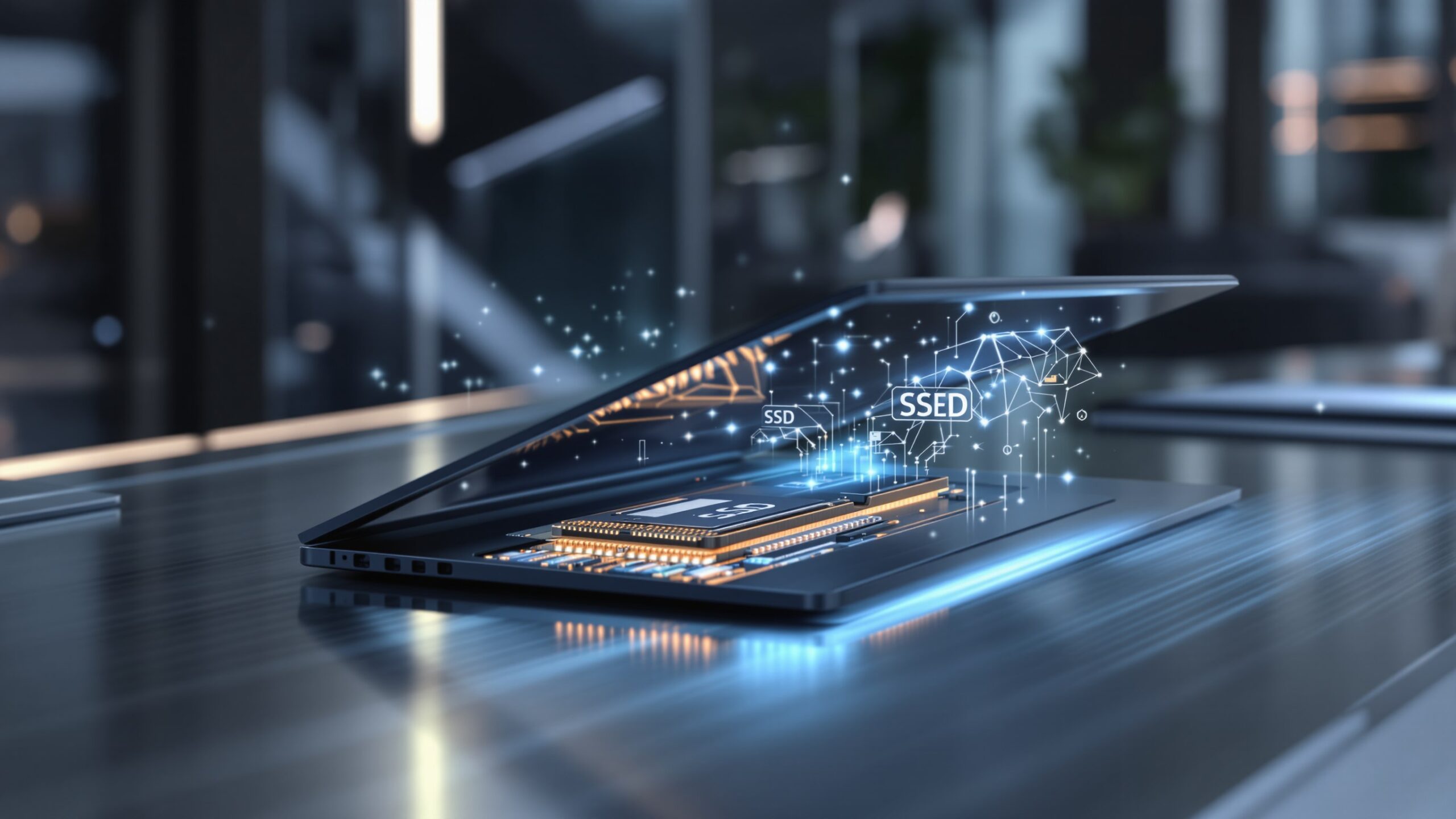
The New Era of Data Storage
Data has become the defining resource of the modern digital economy. From enterprise AI systems and cloud-native applications to personal creative workflows and smart homes filled with connected devices, the demand for fast, secure, and reliable storage has never been greater. In 2026, data storage is no longer simply about capacity—it is about performance architecture, cybersecurity resilience, scalability, and long-term integrity. Organizations and individuals alike now generate massive volumes of information daily. High-resolution media production, real-time analytics, machine learning workloads, and distributed remote collaboration require storage solutions capable of handling intensive read-and-write operations without latency bottlenecks. At the same time, cyber threats, ransomware attacks, and data compliance regulations have transformed storage into a frontline security concern. Modern storage solutions must therefore balance three critical pillars: speed, security, and reliability. The technologies leading the market in 2026 reflect this convergence, combining cutting-edge hardware with intelligent software ecosystems designed to protect and accelerate digital operations.
A: SSDs are significantly faster for booting and transfers.
A: Yes when combined with encryption and strong authentication.
A: RAID improves uptime but is not a backup replacement.
A: Daily or real-time syncing is ideal for active data.
A: NVMe SSD plus NAS backup provides speed and security.
A: Yes, but modern endurance ratings last many years.
A: Low-cost storage designed for infrequent access.
A: Use both for maximum redundancy.
A: Fragmentation, heat, or near-full capacity impacts performance.
A: Fast NVMe primary drive with encrypted cloud and NAS backup.
Why Speed Matters More Than Ever
Speed has evolved into a competitive advantage. Traditional storage delays once measured in seconds are now unacceptable in environments where milliseconds determine productivity outcomes. Applications powered by artificial intelligence, real-time rendering engines, financial modeling platforms, and cloud-based collaboration tools rely heavily on ultra-fast data retrieval.
Solid State Drives (SSDs), particularly NVMe-based solutions, dominate performance-focused environments in 2026. Unlike legacy spinning hard drives, NVMe storage communicates directly with system processors through high-bandwidth PCIe lanes, dramatically reducing latency and enabling parallel data processing. Modern PCIe Gen5 and emerging Gen6 drives deliver throughput levels that were once exclusive to enterprise data centers.
Speed is not only relevant to professionals. Gamers, video editors, software developers, and content creators increasingly depend on rapid load times and seamless multitasking. Faster storage minimizes workflow interruptions, accelerates rendering pipelines, and enhances system responsiveness across operating systems and applications.
Equally important is sustained performance under load. Advanced controllers, thermal management systems, and intelligent caching algorithms ensure consistent speeds even during heavy transfers—an essential requirement for modern hybrid work environments.
Security as a Core Storage Requirement
Cybersecurity threats have reshaped how storage systems are designed and deployed. Data breaches, ransomware incidents, and unauthorized access attempts now represent some of the most significant operational risks facing businesses and individuals alike.
In 2026, leading storage solutions integrate hardware-level encryption as a default feature rather than an optional add-on. Self-encrypting drives (SEDs) automatically protect stored data using AES-256 encryption without impacting performance. Combined with biometric authentication, zero-trust access models, and multi-factor authentication systems, modern storage platforms provide layered defense mechanisms.
Cloud storage providers have also advanced significantly in security architecture. End-to-end encryption, geographic redundancy, anomaly detection powered by AI, and immutable backup snapshots protect data even during sophisticated cyberattacks. Immutable storage—where files cannot be altered or deleted for a specified period—has become particularly valuable for defending against ransomware.
Security now extends beyond protection from attackers. Compliance with privacy regulations such as GDPR, HIPAA, and evolving global data governance standards requires storage solutions capable of audit tracking, automated retention policies, and secure lifecycle management.
Reliability in a Data-Driven World
Reliability remains the foundation upon which all storage decisions rest. Data loss can halt operations, damage reputations, and create significant financial consequences. As digital dependence increases, redundancy and fault tolerance have become essential design principles.
Modern storage ecosystems rely heavily on RAID configurations, distributed storage frameworks, and automated failover systems. Enterprise-grade drives now include predictive failure analytics that monitor performance patterns and alert administrators before hardware issues occur.
Cloud-based redundancy has further improved reliability standards. Data stored across multiple geographic regions ensures continuity even during hardware failures, natural disasters, or infrastructure disruptions. Hybrid systems combining local and cloud backups offer the strongest reliability profile by minimizing downtime while preserving rapid local access.
Longevity is also a growing concern. Archival storage solutions in 2026 prioritize data durability over decades, making them ideal for research institutions, legal archives, media libraries, and historical preservation projects.
NVMe SSDs: The Performance Benchmark
NVMe SSD technology represents the gold standard for speed-focused storage solutions. Designed to maximize parallelism, these drives eliminate traditional bottlenecks associated with older storage interfaces.
Modern NVMe drives achieve multi-gigabyte-per-second transfer speeds while maintaining extremely low latency. This performance makes them ideal for high-demand workloads such as 8K video editing, virtualization environments, AI model training, and gaming systems requiring rapid asset streaming.
Thermal engineering has become a defining factor in NVMe design. Advanced heat spreaders, graphene cooling layers, and motherboard-integrated heatsinks help maintain performance consistency during sustained workloads. Reliability improvements, including higher endurance ratings measured in terabytes written (TBW), ensure long operational lifespans.
For professionals prioritizing speed without sacrificing dependability, NVMe SSDs remain the most effective single-device storage upgrade available in 2026.
Cloud Storage: Scalability Meets Accessibility
Cloud storage continues to redefine how data is accessed and managed. Rather than relying solely on physical hardware, organizations increasingly adopt scalable cloud ecosystems capable of expanding instantly as storage demands grow.
Major cloud platforms now offer intelligent tiered storage systems. Frequently accessed data remains in high-performance environments, while rarely accessed files move automatically to cost-efficient archival layers. This optimization balances performance with operational costs.
Collaboration represents another major advantage. Distributed teams can securely access shared files from anywhere, enabling seamless workflows across continents. Real-time synchronization ensures that updates occur instantly without version conflicts or manual transfers.
Security innovations such as confidential computing and encrypted processing environments allow sensitive data to remain protected even during active computation—a critical development for healthcare, finance, and government sectors.
Network Attached Storage (NAS): The Hybrid Powerhouse
Network Attached Storage systems have evolved dramatically, becoming one of the most versatile storage solutions available. Modern NAS platforms serve as centralized data hubs for homes, creative studios, and small businesses.
In 2026, NAS devices support multi-gigabit networking, automated backups, virtualization hosting, and private cloud functionality. Users benefit from local-speed performance combined with remote accessibility traditionally associated with cloud services.
Advanced NAS operating systems now integrate AI-assisted file organization, intelligent caching, and automated threat detection. Snapshot technology allows users to restore files instantly after accidental deletion or ransomware incidents.
For users seeking control over their data without sacrificing convenience, NAS systems represent an ideal balance between local ownership and cloud-like functionality.
External SSDs and Portable Storage Innovation
Mobility has transformed storage expectations. Professionals working across multiple locations require portable solutions capable of delivering desktop-level performance.
External SSDs connected via USB4 or Thunderbolt interfaces now rival internal drives in speed. Ruggedized designs featuring shock resistance, water protection, and hardware encryption make portable storage suitable for field production, journalism, and engineering environments.
Creative professionals benefit particularly from these advancements. Photographers and filmmakers can edit directly from portable drives without transferring large datasets to internal systems, significantly accelerating production workflows.
Portable storage has shifted from backup convenience to primary operational infrastructure.
Object Storage and Enterprise Data Lakes
As organizations manage petabytes of information, traditional file-based storage structures become inefficient. Object storage systems address this challenge by organizing data as discrete objects enriched with metadata rather than hierarchical folders.
This architecture enables massive scalability while improving retrieval efficiency for analytics and AI workloads. Data lakes powered by object storage allow enterprises to store structured and unstructured information together, supporting machine learning pipelines and predictive analytics.
Reliability improves through distributed replication, ensuring data integrity across multiple nodes. Object storage has become essential for industries managing large-scale datasets such as autonomous systems, scientific research, and streaming platforms.
Backup Strategies in 2026: Beyond Simple Copies
Modern backup strategies emphasize resilience rather than duplication alone. The widely adopted 3-2-1 backup rule—three copies of data stored on two different media types with one offsite copy—remains relevant but has evolved with automation and cloud integration.
Continuous data protection systems now capture changes in real time, minimizing recovery gaps. Immutable backups prevent malicious encryption or deletion, providing guaranteed recovery points after cyber incidents.
Disaster recovery planning increasingly includes automated failover environments capable of restoring entire systems within minutes. Businesses no longer ask whether backups exist but how quickly operations can resume after disruption.
Emerging Technologies Shaping the Future
The storage landscape in 2026 continues to evolve rapidly. Several emerging technologies promise transformative improvements in performance and durability.
DNA data storage research demonstrates extraordinary density potential, capable of storing massive datasets within microscopic physical space. While still experimental, it signals future archival breakthroughs.
Storage-class memory technologies bridge the gap between RAM and persistent storage, enabling near-instant access speeds previously unattainable with traditional drives. Meanwhile, AI-driven storage management platforms dynamically optimize performance, predict failures, and automate data placement decisions.
Quantum-resistant encryption methods are also gaining attention as organizations prepare for future cybersecurity challenges associated with quantum computing advancements.
Choosing the Right Storage Solution
Selecting the best storage solution depends heavily on workload requirements, risk tolerance, and scalability needs. High-performance computing environments benefit from NVMe arrays, while collaborative teams often prioritize cloud-based ecosystems. Content creators may combine portable SSDs with NAS systems, and enterprises increasingly deploy hybrid infrastructures blending on-premises hardware with cloud redundancy.
Cost efficiency must be evaluated alongside performance and security considerations. The cheapest storage option often becomes the most expensive when downtime, breaches, or recovery failures occur.
A strategic storage approach focuses not only on current needs but anticipated growth over several years.
Sustainability and Energy Efficiency
Environmental sustainability has become an important factor in storage development. Data centers consume significant global energy resources, prompting innovation in energy-efficient storage architectures.
Modern SSDs require less power than traditional hard drives, while hyperscale cloud providers increasingly rely on renewable energy sources. Intelligent workload distribution reduces unnecessary processing, lowering energy consumption without compromising performance. Sustainable storage practices now align operational efficiency with environmental responsibility, an increasingly important consideration for corporations and consumers alike.
The Future of Reliable Digital Infrastructure
Data storage in 2026 represents far more than hardware capacity. It functions as the backbone of digital transformation, enabling innovation across industries ranging from healthcare and finance to entertainment and scientific research.
The most effective storage solutions combine ultra-fast performance, advanced security protocols, and resilient redundancy systems capable of protecting information against both technical failures and cyber threats. As artificial intelligence, edge computing, and immersive technologies continue to expand, storage infrastructure will play an increasingly central role in shaping digital experiences.
Organizations and individuals who invest strategically in modern storage technologies position themselves for long-term success in a data-driven world where speed determines productivity, security safeguards trust, and reliability ensures continuity. In the years ahead, storage will continue evolving toward smarter, faster, and more autonomous systems—quietly powering the innovations that define the modern era.